The desert fortresses of ancient Khorezm
Between Khiva and Nukus the sand is scattered with walls two thousand years old. What they were, which ones to see, and how a day among them is arranged.
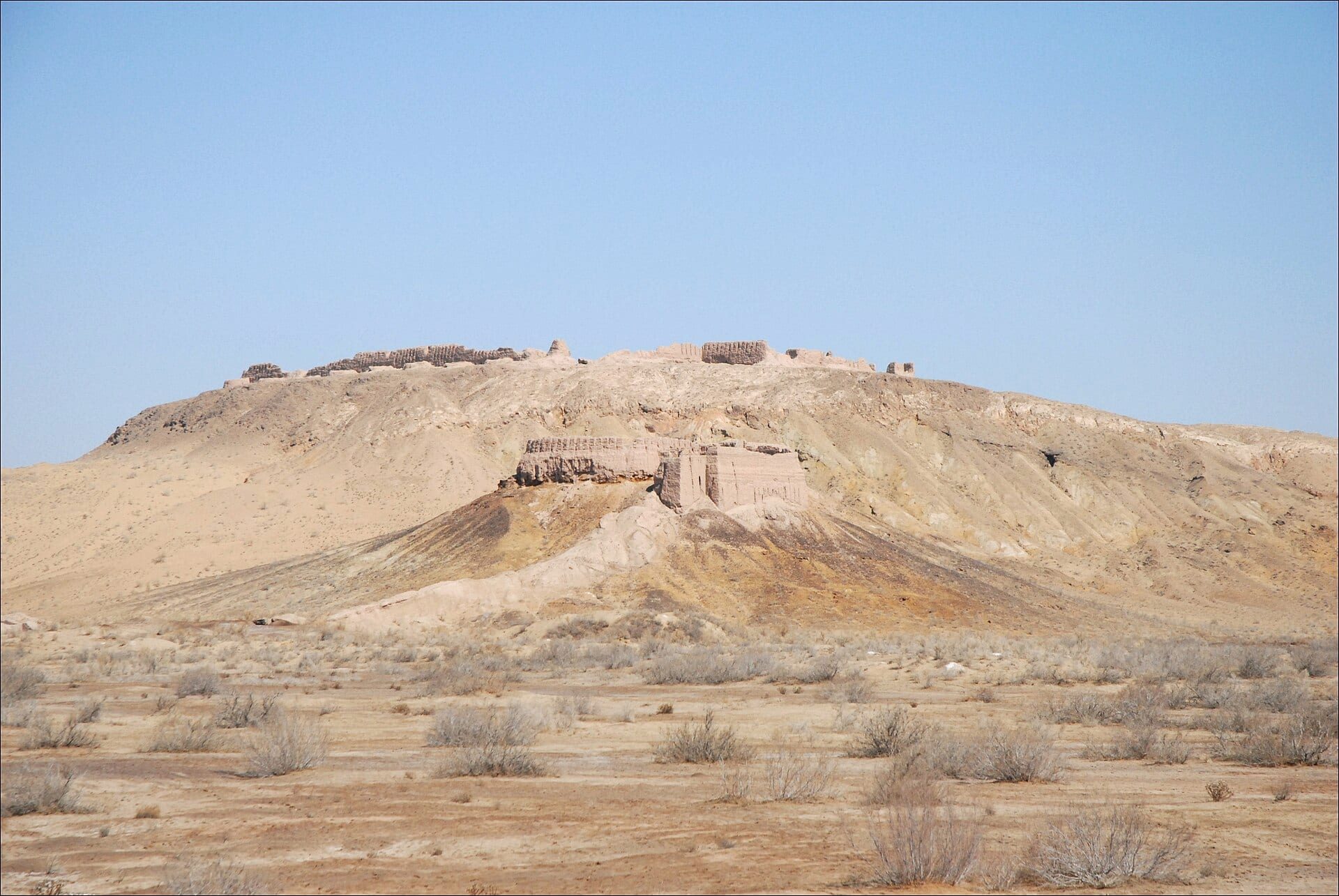
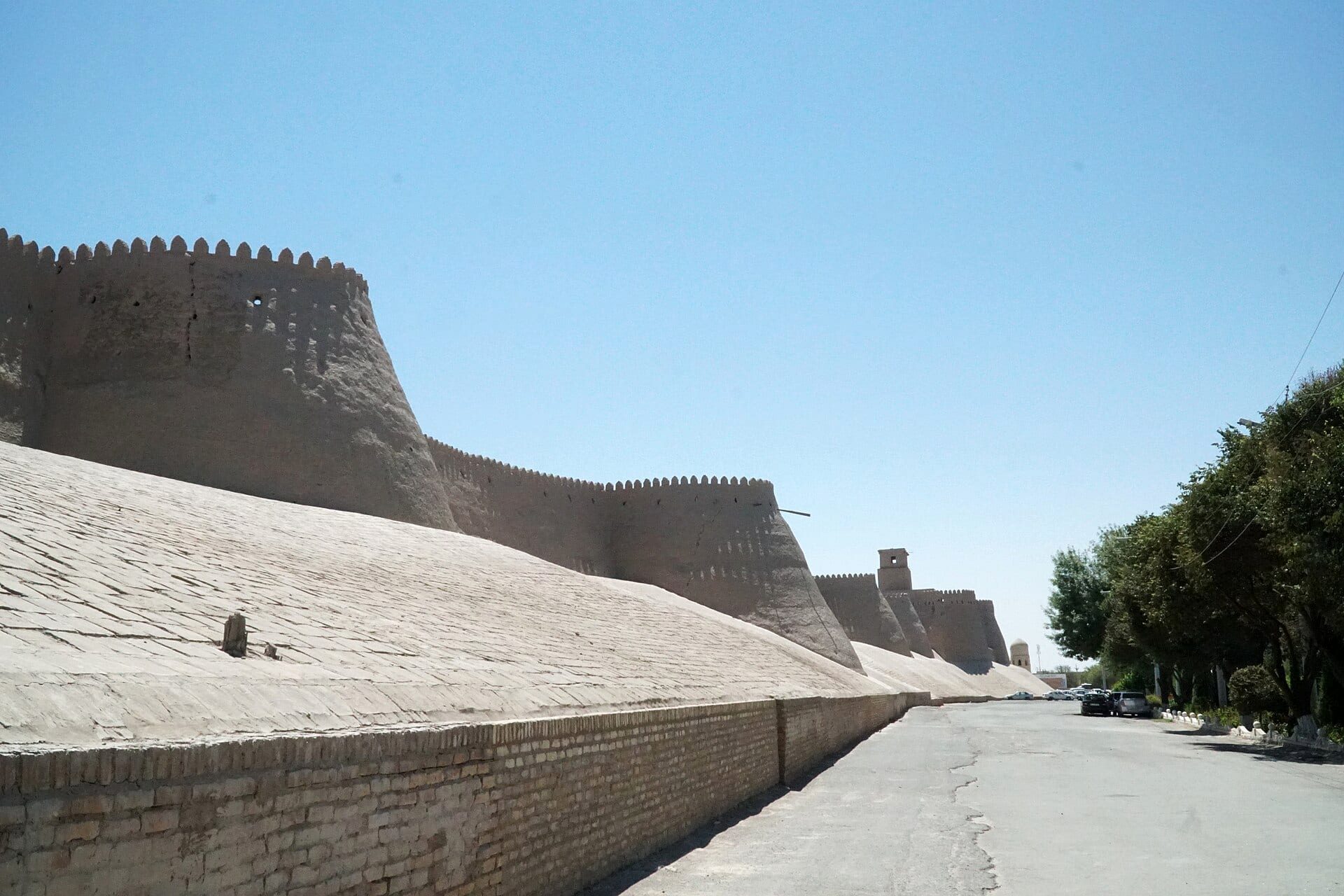
Between Khiva and Nukus the road runs through cotton, then through sand, and the sand is scattered with walls. Some are low mounds only an archaeologist would notice. Others stand to the height of a house, with towers at the corners and arrow slits still open to the wind. They are older than anything in Khiva, and most travellers who come this far west see them in a single morning. They deserve more than a glance from the road, and a day gives them their due.
What they are
Khorezm is the oasis of the lower Amu Darya, the last green before the river reaches what was once the Aral Sea. It was a kingdom long before Samarkand and Bukhara had their tiled domes. From about the fourth century BC its people raised towns and forts along the river in mud brick, the one material the delta has in quantity, and fed them with canals dug by hand and kept open by hand. Over the following thousand years the river moved, the canals failed, and one town after another was left to the sand. Nothing replaced them, and the desert kept what it was given.
The best of them lie on the right bank, in a district called Ellik Qala, the fifty fortresses. What matters is that it almost never rains here, and that mud brick, which a wet climate takes down in a generation, has stood here for two thousand years. The tops of the walls are rounded, the towers have lost their faces, but the mass of each is still there, and from the top of one you can see the next.
The ones to see
Toprak-Kala was a royal city of the early centuries AD: a walled rectangle of straight streets with a palace raised on a platform in its north-west corner. The Khorezm expedition under Sergei Tolstov excavated it from the late 1930s, most of the work coming after the war, and found what no one had expected: halls with painted walls, clay figures of kings and their court, and an archive written on wood and leather. Most of what could be moved went to museums, above all in Moscow and St Petersburg; a little of it is in the Savitsky in Nukus. What remains on the ground is the plan of the streets and the great block of the palace, which still rises above the plain.
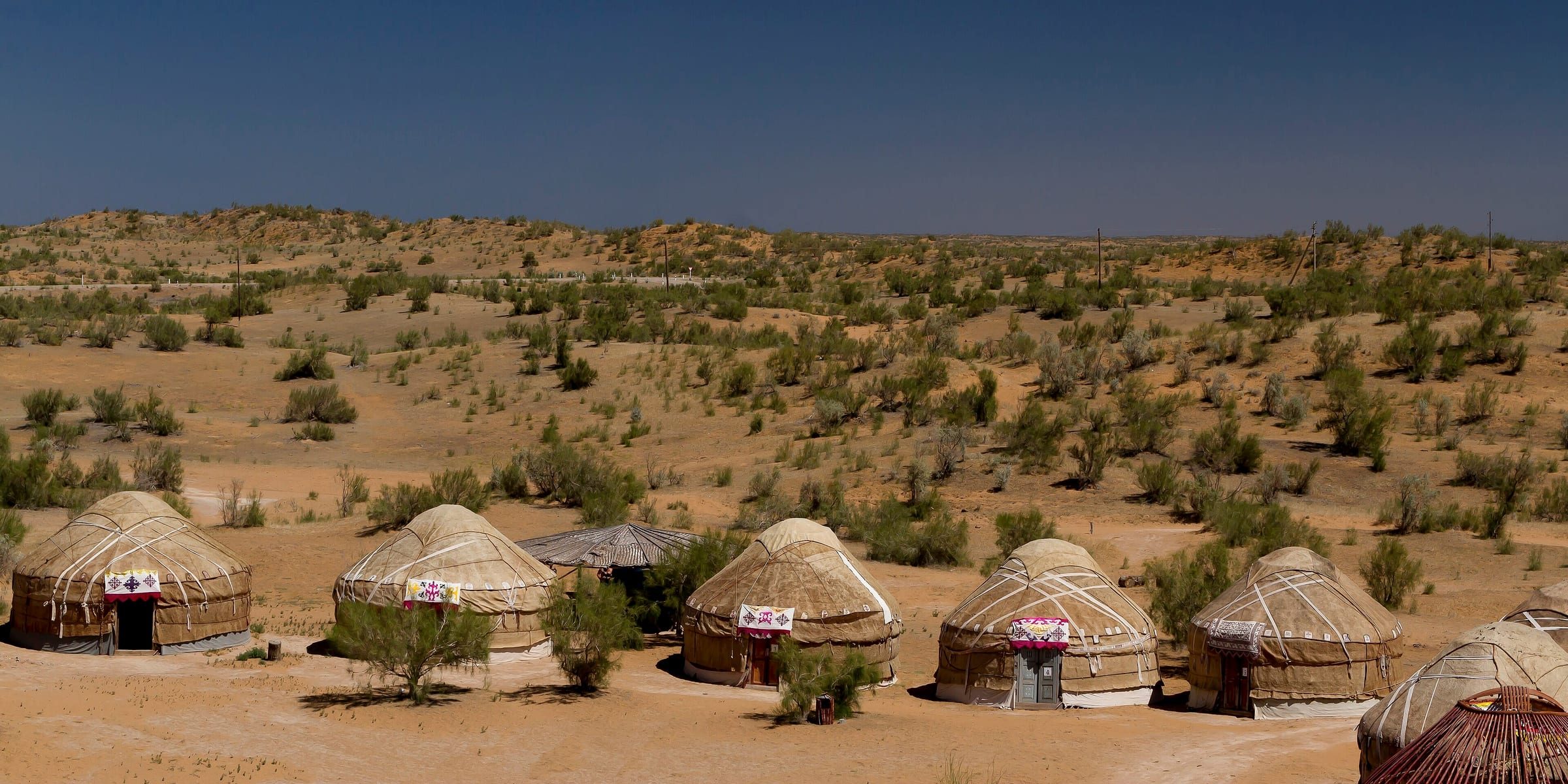
Ayaz-Kala is the one in the photographs: three forts on and below a hill. The oldest, from about the fourth century BC, runs round the whole crest of the ridge; a later fort sits on the slope, and a third, the largest, on the flat ground at the foot. From the upper walls the Kyzylkum falls away on every side in dunes and scrub to a horizon with nothing on it. A yurt camp stands below the hill.
Kyzyl-Kala is small and square, a fort of the early centuries AD within sight of Toprak-Kala, and some years ago it was partly rebuilt. The new brick is clean and the corners are sharp, so that for once you see what the others looked like when they were new. Some find this helpful. Others find it a loss and prefer the ruin. We stop there, say both, and let you decide.
The day
The fortresses are reached by car, from Khiva or from Nukus. From Khiva you drive up through Urgench, cross the Amu Darya and turn along the right bank; from Nukus you follow the right bank up through Beruniy without a crossing. Either way, a few hours are spent among three sites, with short drives between them on paved road and a stretch of track at the end of each.
There is no shade and no shelter at any of them. Spring and autumn are the seasons for this. In July and August the walls give back the heat all afternoon, and in winter, the coldest of any lowland in the country, the wind off the desert is hard to stand in for long. Bring a hat and water, and shoes you can climb in.
The climb at Ayaz-Kala is loose and steep, a path of broken brick and sand up the face of the hill, and it takes longer than it looks from below. The top is worth it, and your guide knows the line. Those who stay the night sleep in the yurt camp below, which is what our Khorezm and the Aral Sea journey does: dinner by the fire, the forts going dark on the hill above, and in the morning the light coming up across the Kyzylkum before the heat does.
How it fits a journey
On the Khorezm and the Aral Sea journey the fortresses are the day between Nukus and Khiva. The direct road takes about three hours; turned aside for the right bank, with the night at the camp, it becomes a day and a morning, and the drive on to Khiva is shorter than the direct road from Nukus. On any route that reaches Khiva they are a day out from the town: across the river after breakfast, the three sites, and back inside the walls by late afternoon, in time for the sunset from the roofs.
Your travel designer arranges the car with driver, a private guide who knows the sites and their history, and the camp if you want the night. The month matters more here than almost anywhere else on the route. Tell us where the day falls in your dates, and we will tell you honestly whether it suits.