Karakalpakstan and the Aral Sea
Avant-garde art and a vanished sea
The far west of the country. A collection of once-banned Soviet painting in Nukus, the ships left on the old seabed at Muynak and a night on what remains of the Aral shore.
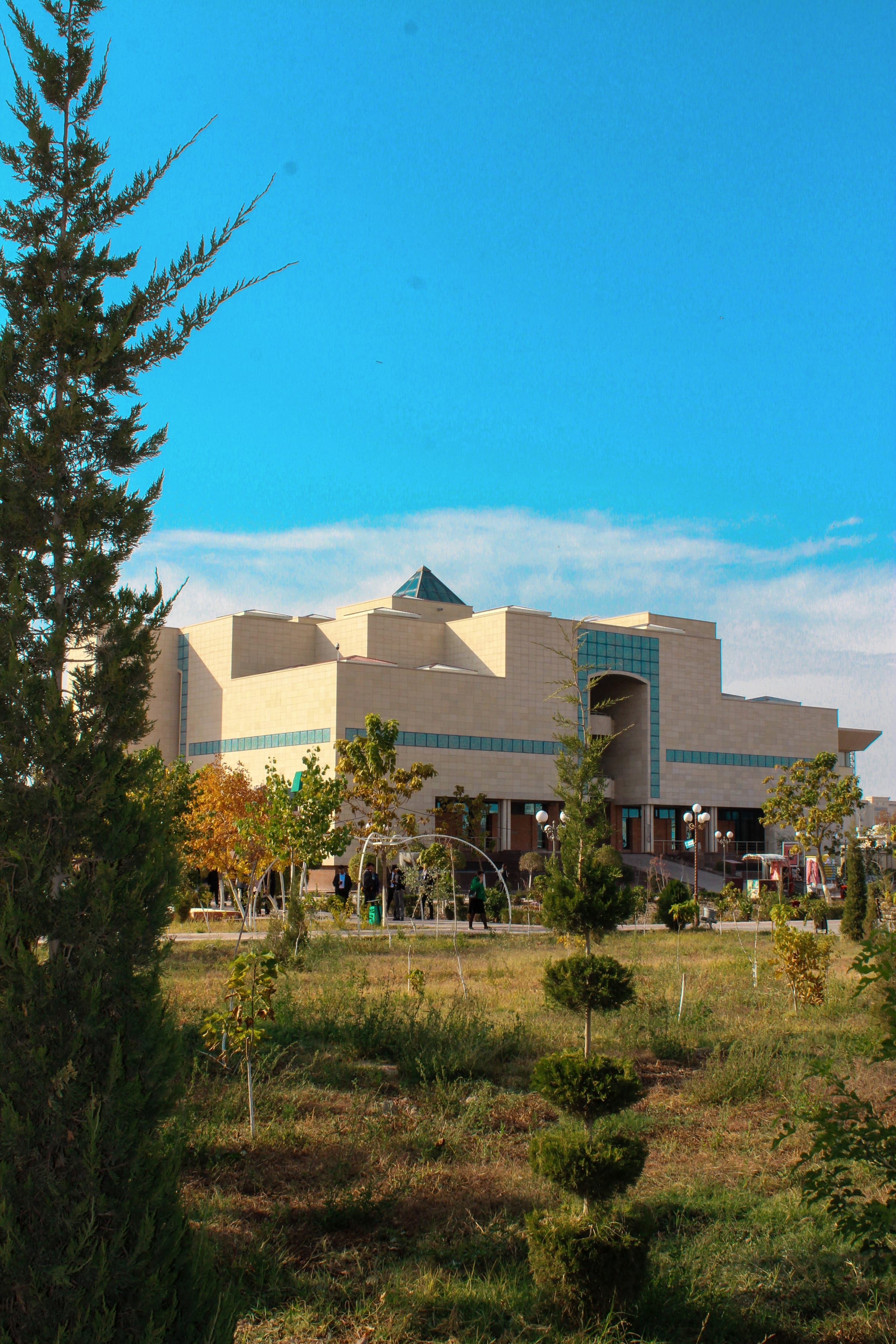
Karakalpakstan takes up the western third of Uzbekistan and receives a small fraction of its visitors. It is a republic within the republic, with its own language and a landscape of steppe, salt and the Amu Darya delta, and the reasons to go are unlike anything further east. In Nukus, a museum built around one man’s collection holds paintings by Russian and Uzbek artists of the 1920s and 1930s, gathered by Igor Savitsky at a time when much of the work could be shown nowhere else. It rewards a long morning and a guide who knows the pictures.
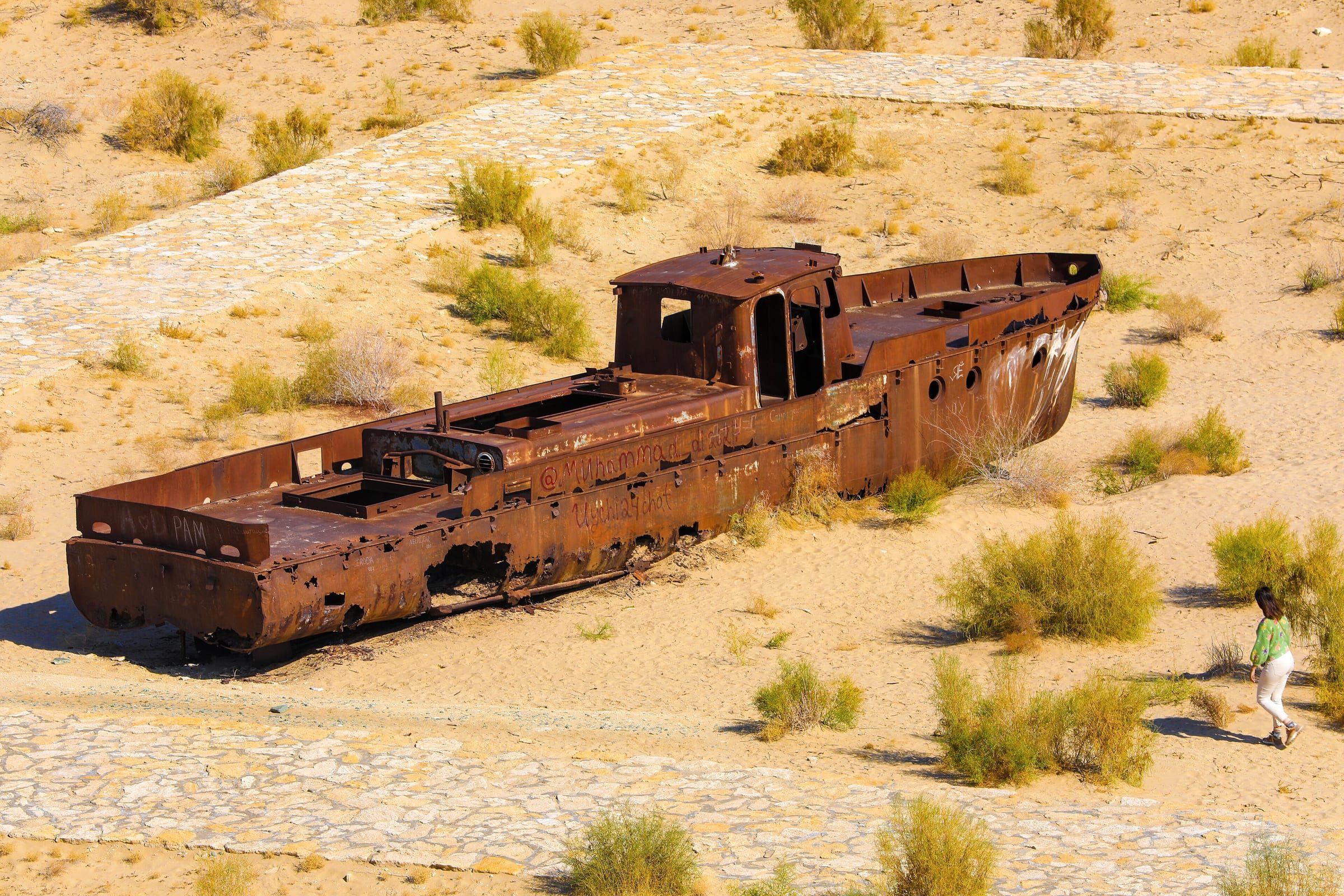
North of Nukus the road runs to Muynak, once a fishing port on the Aral Sea. The sea is now far beyond the horizon, and the boats that once worked it lie on the sand below the old harbour wall, a place where people tend to fall silent. Those with a further day and a taste for empty country can continue across the Ustyurt plateau to the water itself and sleep in a camp on the shore. On the way back, the necropolis of Mizdakhan, a hill of tombs and shrines outside Khodjeyli, has been in use for more than two thousand years.
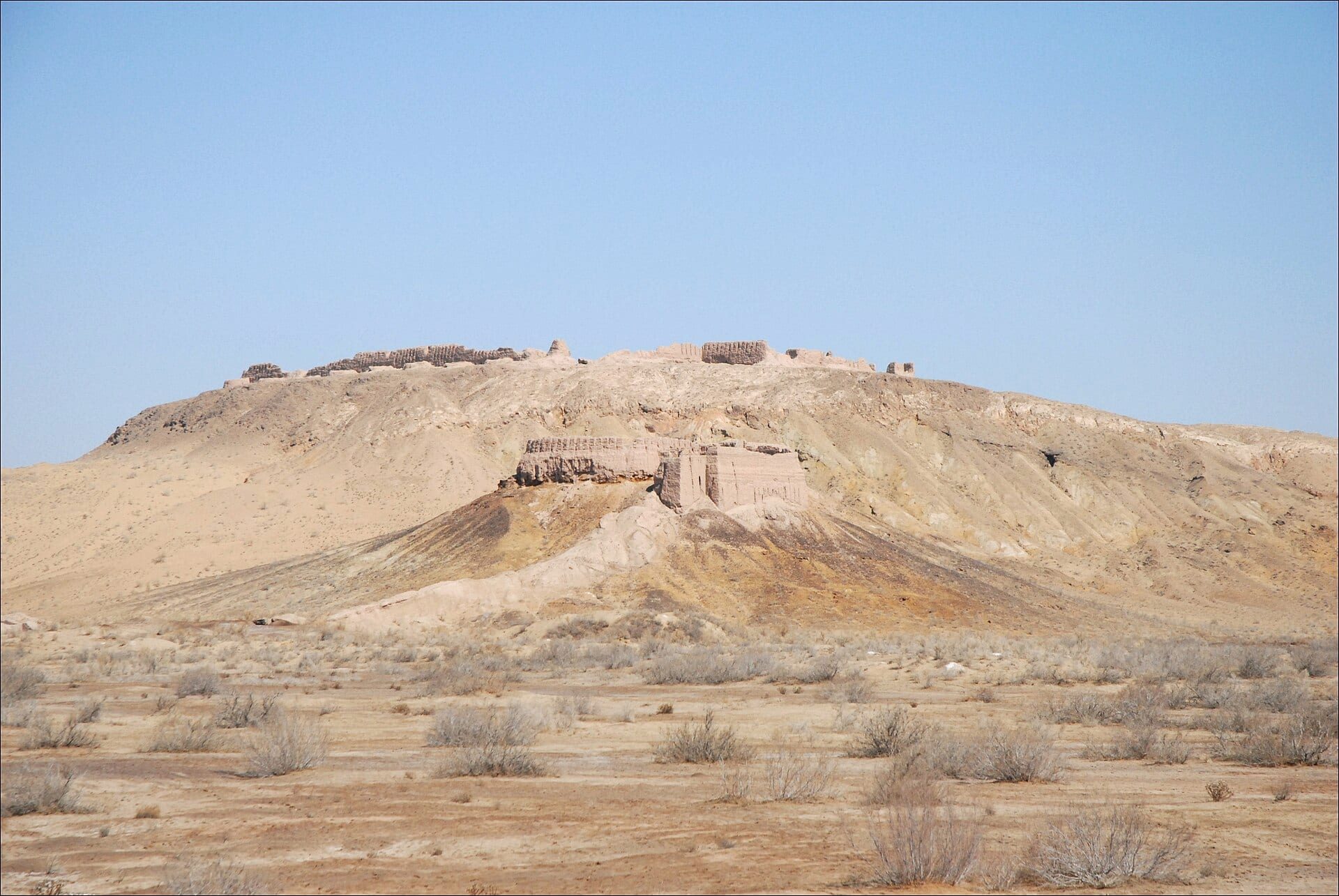
This is not a comfortable region in the conventional sense, and we say so. Distances are long, the roads beyond Muynak are unpaved and the hotels in Nukus are simple. What it offers is a kind of attention that the Silk Road cities, for all their beauty, no longer give: to be somewhere almost no one goes, with a private driver and guide who know the country and the people along the road. Our Khorezm and the Aral Sea journey gives the republic three of its seven days: Nukus, Muynak and a night below Ayaz-Kala on the way to Khiva. The shore itself is a long day and a night more, which your travel designer adds for those who want it. The region also joins any route that reaches Khiva.
The way here and on
From Tashkent
- Tashkent to Nukus
- Domestic flight, about 1 hour 20 minutes in the air.
Onward
- Nukus to Khiva
- Private car with driver, about 3 hours.
Travel times are typical, not a timetable, and your designer confirms each one.
When to go
| Month | Typical high / low | Conditions |
|---|---|---|
| JanuarySunrise and sunset: 08:32–17:53 | 0° / −8° | Cold |
| FebruarySunrise and sunset: 08:01–18:34 | 3° / −6° | Cold |
| MarchSunrise and sunset: 07:15–19:09 | 12° / 1° | Unsettled |
| AprilSunrise and sunset: 06:22–19:45 | 21° / 8° | Best |
| MaySunrise and sunset: 05:40–20:19 | 29° / 14° | Best |
| JuneSunrise and sunset: 05:23–20:44 | 34° / 19° | Hot |
| JulySunrise and sunset: 05:38–20:41 | 36° / 21° | Hot |
| AugustSunrise and sunset: 06:09–20:06 | 34° / 18° | Hot |
| SeptemberSunrise and sunset: 06:43–19:14 | 28° / 12° | Best |
| OctoberSunrise and sunset: 07:17–18:21 | 19° / 5° | Good |
| NovemberSunrise and sunset: 07:55–17:40 | 10° / −1° | Cold |
| DecemberSunrise and sunset: 08:27–17:29 | 3° / −5° | Cold |
Typical conditions by month. Long-run averages, not a forecast — real days land either side. Sunrise and sunset on the 15th of each month, in Uzbekistan time.
Journeys that go there
Khorezm and the Aral Sea
The far west of the country as a journey in its own right: the Savitsky collection in Nukus, the boats on the dry seabed at Muynak, the fortresses of ancient Khorezm and two nights inside the walls of Khiva.
Nukus: 2 nights · Ayaz-Kala camp: 1 night
From the journal
Begin your journey
Tell us when you would like to travel and what you would like to see. One designer will reply within one working day.