Shrines and sacred places
Uzbekistan’s shrines taken as living places of prayer rather than monuments: the Hazrati Imam complex and its ancient Qur’an in Tashkent, Shah-i-Zinda, the mausoleum of Bahauddin Naqshband outside Bukhara, the sacred spring at Nurata and the necropolis of Mizdakhan, visited in the quiet hours.
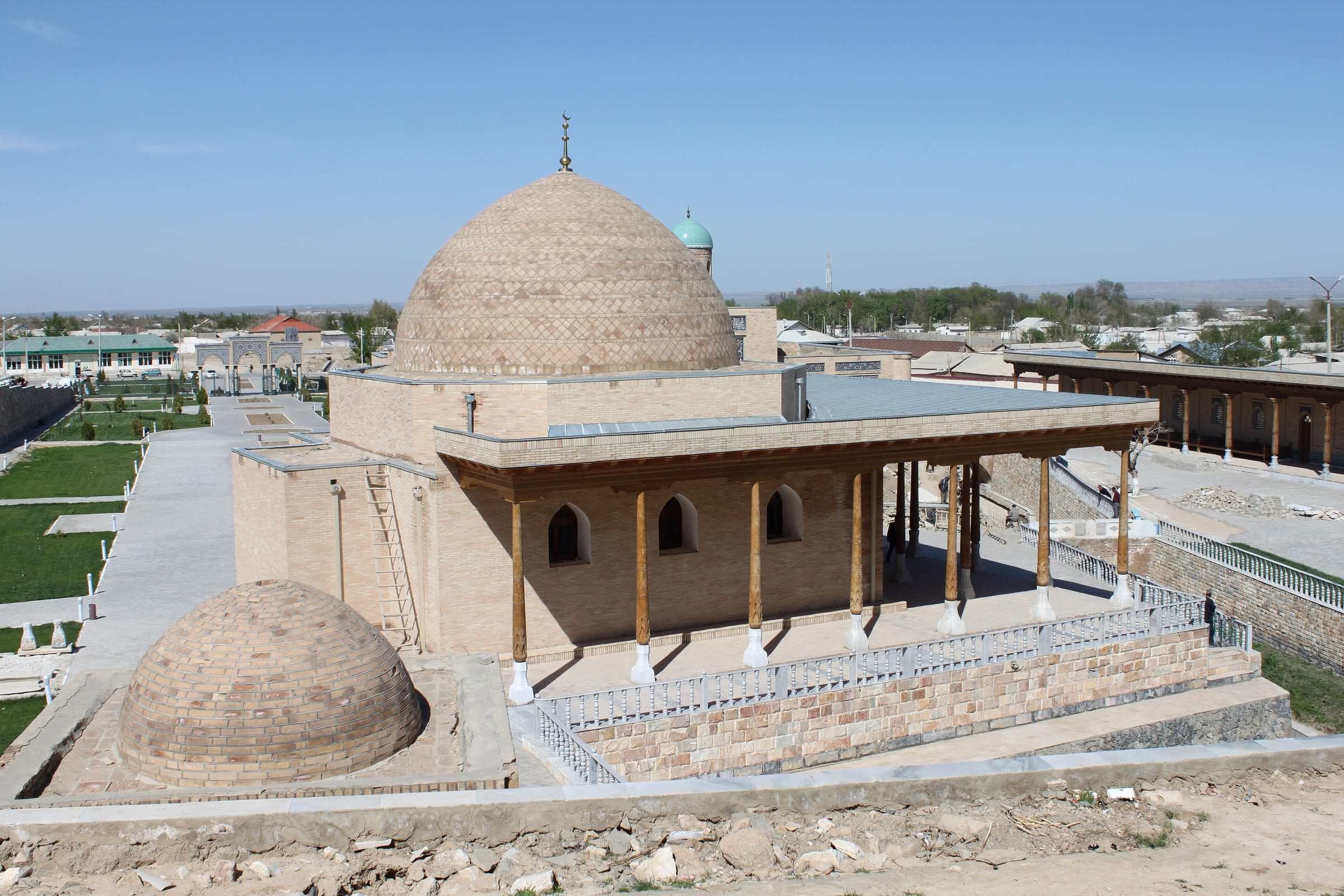
The shrines of Uzbekistan are places where people still come to pray, and that is the way in. Seen as monuments they are tilework; seen in use they are something else. In Tashkent, the Hazrati Imam complex is where the old city prays, and its library keeps one of the oldest Qur’ans in the world. Shah-i-Zinda in Samarkand is a street of tombs that grew around the shrine of Qusam ibn Abbas, a cousin of the Prophet, and pilgrims still climb its stairway. Outside Bukhara, the mausoleum of Bahauddin Naqshband, founder of the Naqshbandi order, sits in its courtyards beside a pool, and is rarely empty. At Nurata the Chashma spring rises beside a mosque into a clear pool, where the water is held sacred and the fish are left alone. Further off, the hill of Mizdakhan outside Khodjeyli, in Karakalpakstan, has been a burial ground for more than two thousand years. At Dorus Saodat in Shakhrisabz is the crypt Timur prepared for himself. He never lay in it: he is in Samarkand, under the dome of Gur-e-Amir.
The manners are simple, and worth setting out plainly. Shoes come off where others have taken theirs off. Shoulders and knees stay covered, and women carry a light scarf for the inside of a mosque or a mazar, the word used here for a shrine. Nobody at prayer is photographed without being asked first. Thursday evenings and Fridays are the busiest times, when the courtyards fill with families; they are not the quietest hours, but they are often the most moving. Your private guide reads the inscriptions over the doorways and on the tombs, and knows when to say nothing.
What we arrange is mostly a matter of hours and company. The visits are timed for the quiet of the day: Hazrati Imam early, while the square is still cool; Shah-i-Zinda late in the afternoon, when the groups have thinned and the light is low on the tiles; Naqshband first thing, or on a Thursday evening if you would rather see it full. The guide matters more here than on most days: ours can explain the Sufi orders and tell one Timurid tomb from another without turning the morning into a lecture, and know which questions keep for the car. None of this is a separate programme. It runs as a thread through the journeys that carry it, so that an hour in a courtyard where people are praying sits naturally between the bazaar and the train. Tell your travel designer it matters, and we will give it the time it needs.
Where it happens
From and back to Tashkent, in the order the roads and trains run. Change the places and nights there.
More journeys
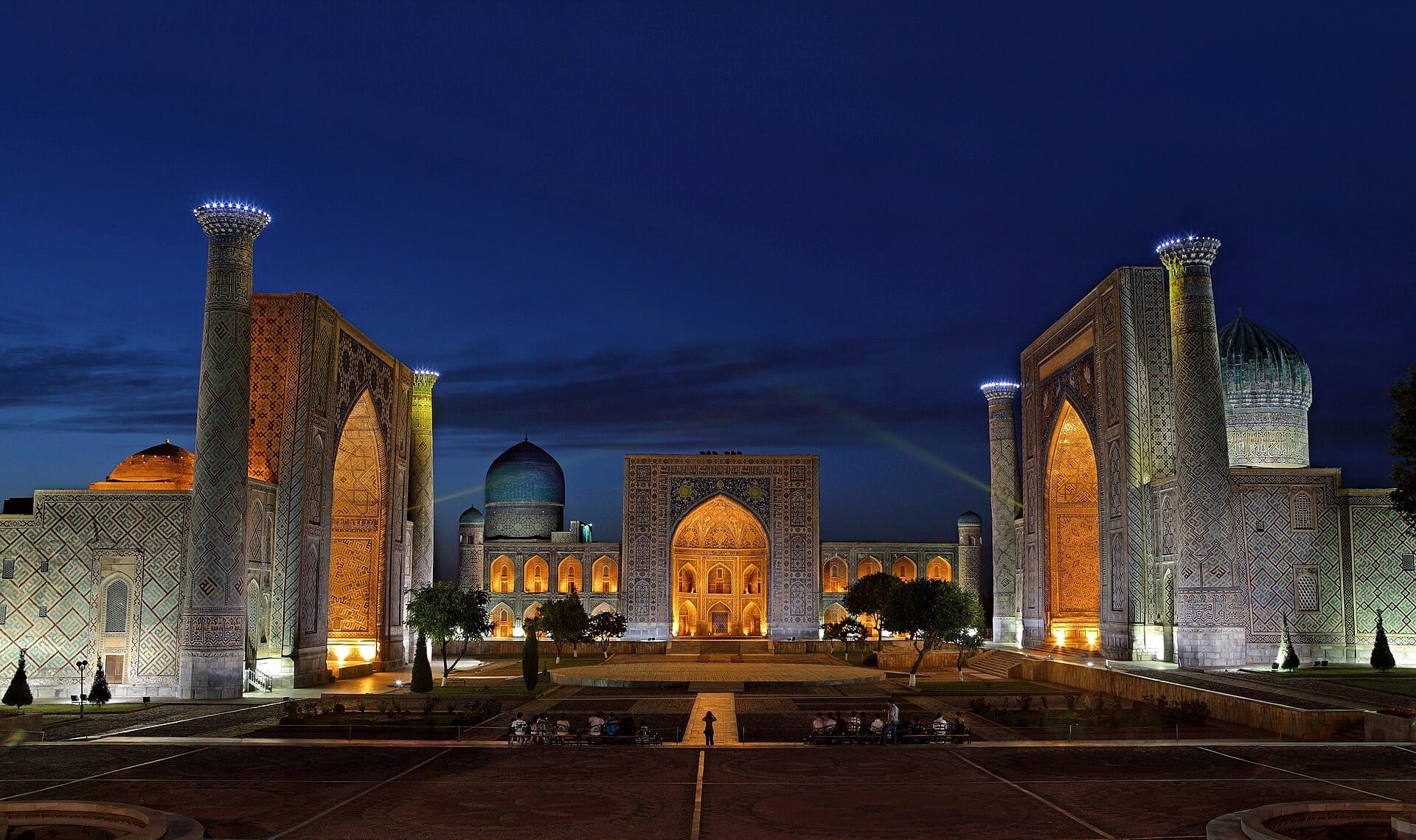
Silk Road Classic
The four great cities in one week: Tashkent, Khiva, Bukhara and Samarkand, with a day across the desert and high-speed trains between them.
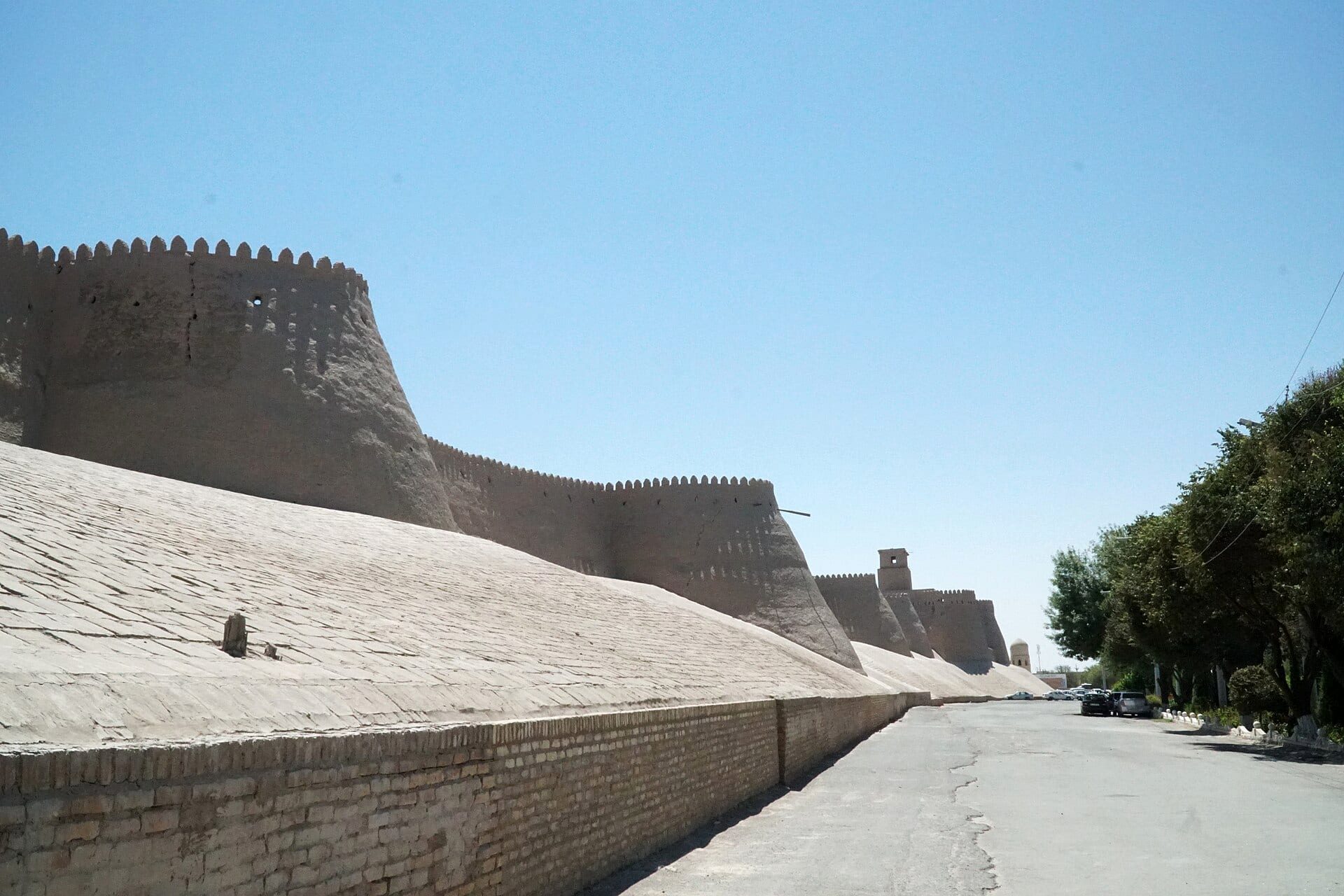
The Grand Journey across Uzbekistan
All four Silk Road cities in eleven days, with a night in a yurt beside Lake Aydarkul and a day in Shakhrisabz, the town where Timur was born.
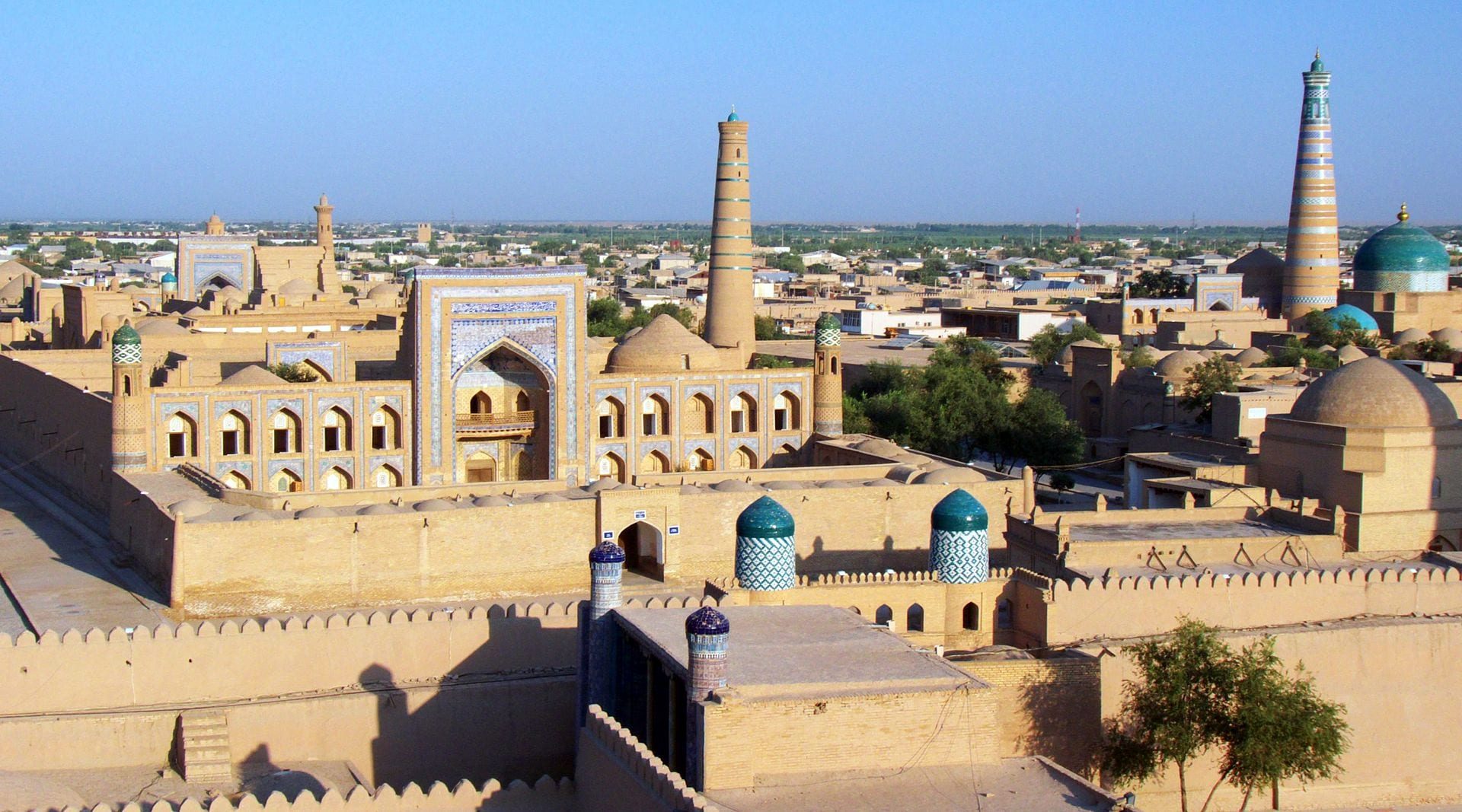
Uzbekistan in Depth
Fifteen days for the whole country: the four Silk Road cities with the desert between them, a day in Shakhrisabz, and the potters and silk weavers of the Fergana Valley at the end.
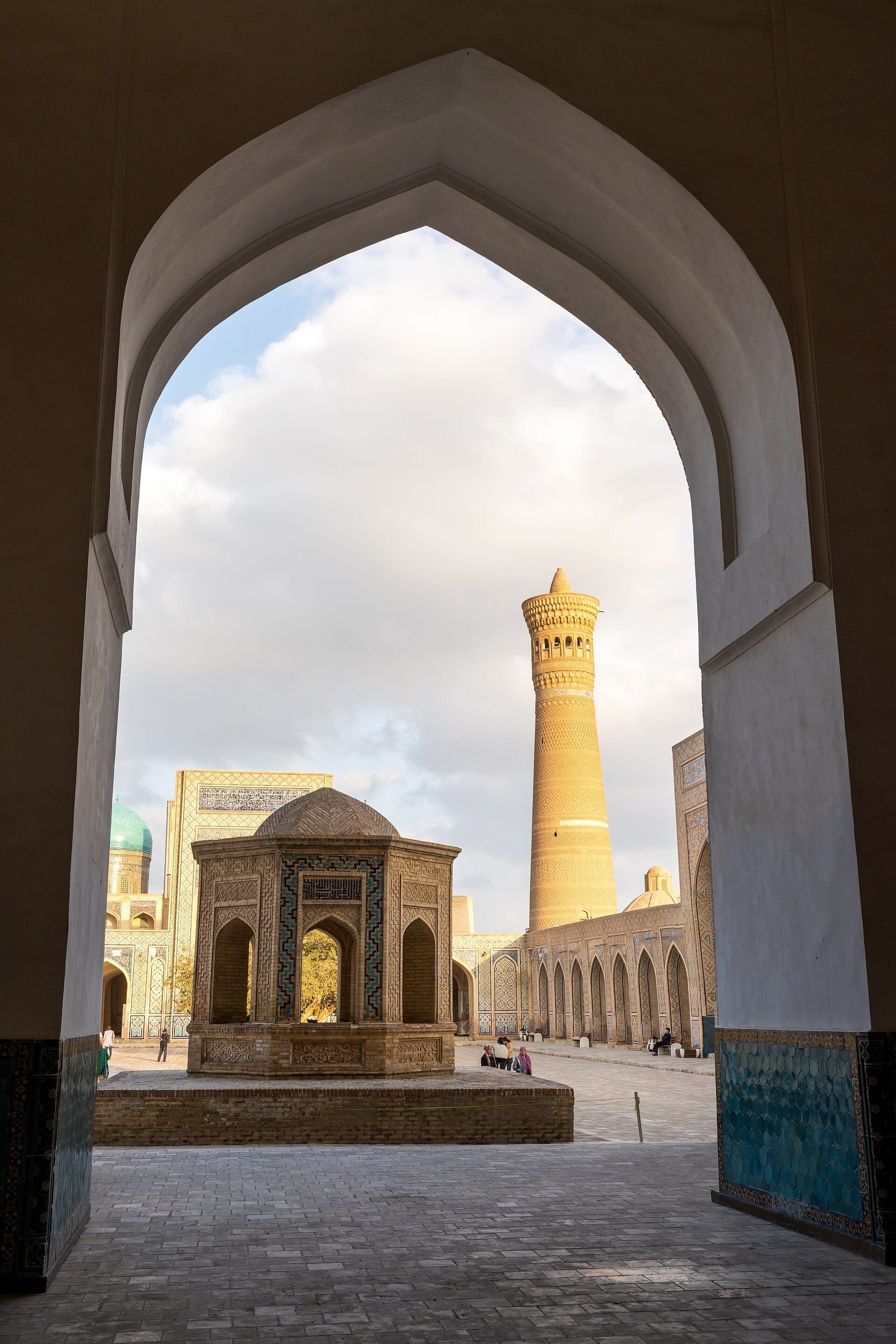
Samarkand and Bukhara Express
Four days for the two most celebrated cities of the Silk Road, Samarkand and Bukhara, with the high-speed train between them and time to look rather than hurry.
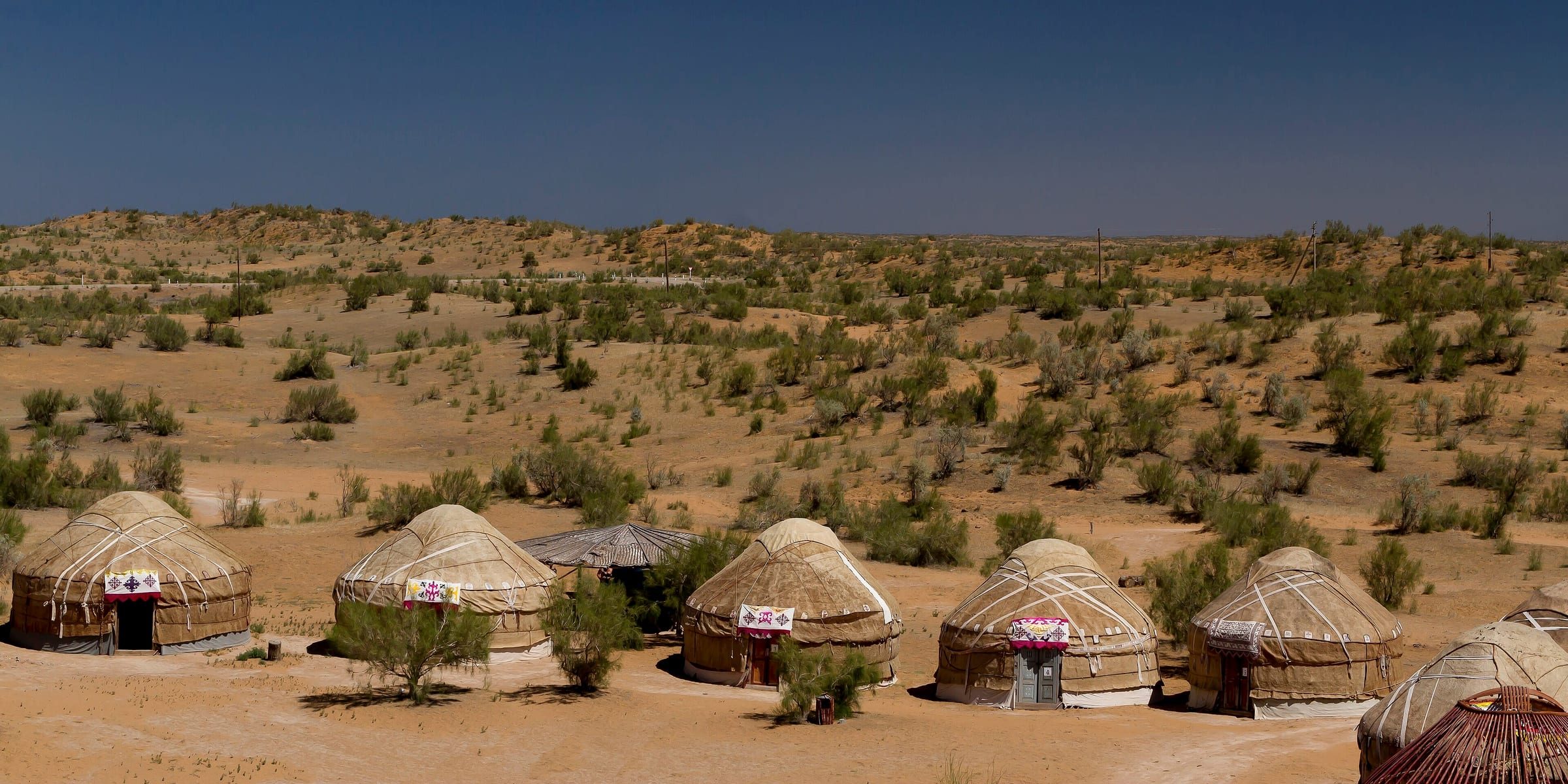
Nurata Yurt Escape
A two-day desert interlude between Samarkand and Bukhara: the sacred spring at Nurata, a camel ride and a night under the stars in a yurt camp by Lake Aydarkul.
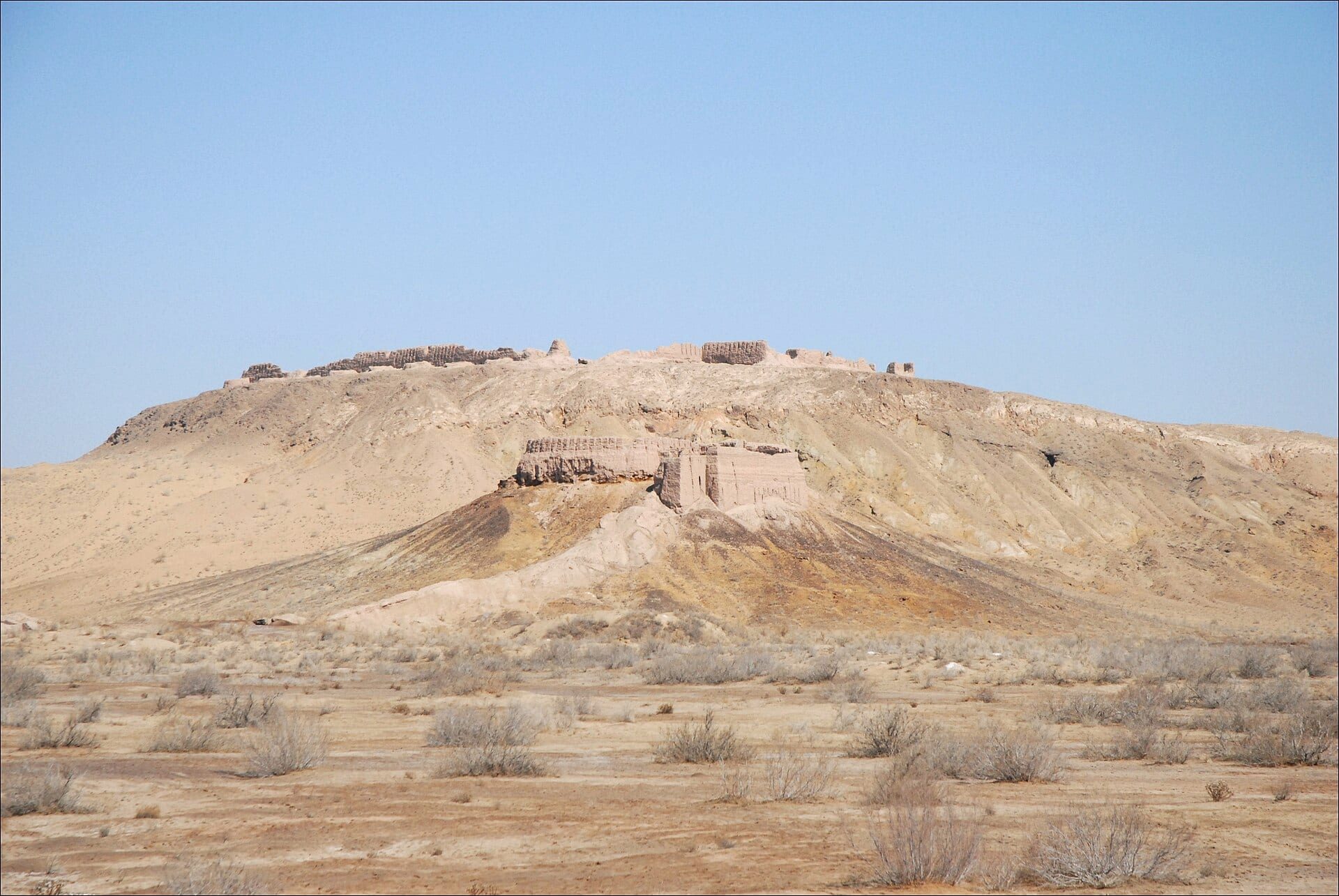
Khorezm and the Aral Sea
The far west of the country as a journey in its own right: the Savitsky collection in Nukus, the boats on the dry seabed at Muynak, the fortresses of ancient Khorezm and two nights inside the walls of Khiva.
Begin your journey
Tell us when you would like to travel and what you would like to see. One designer will reply within one working day.