Bukhara
Two thousand years, on foot
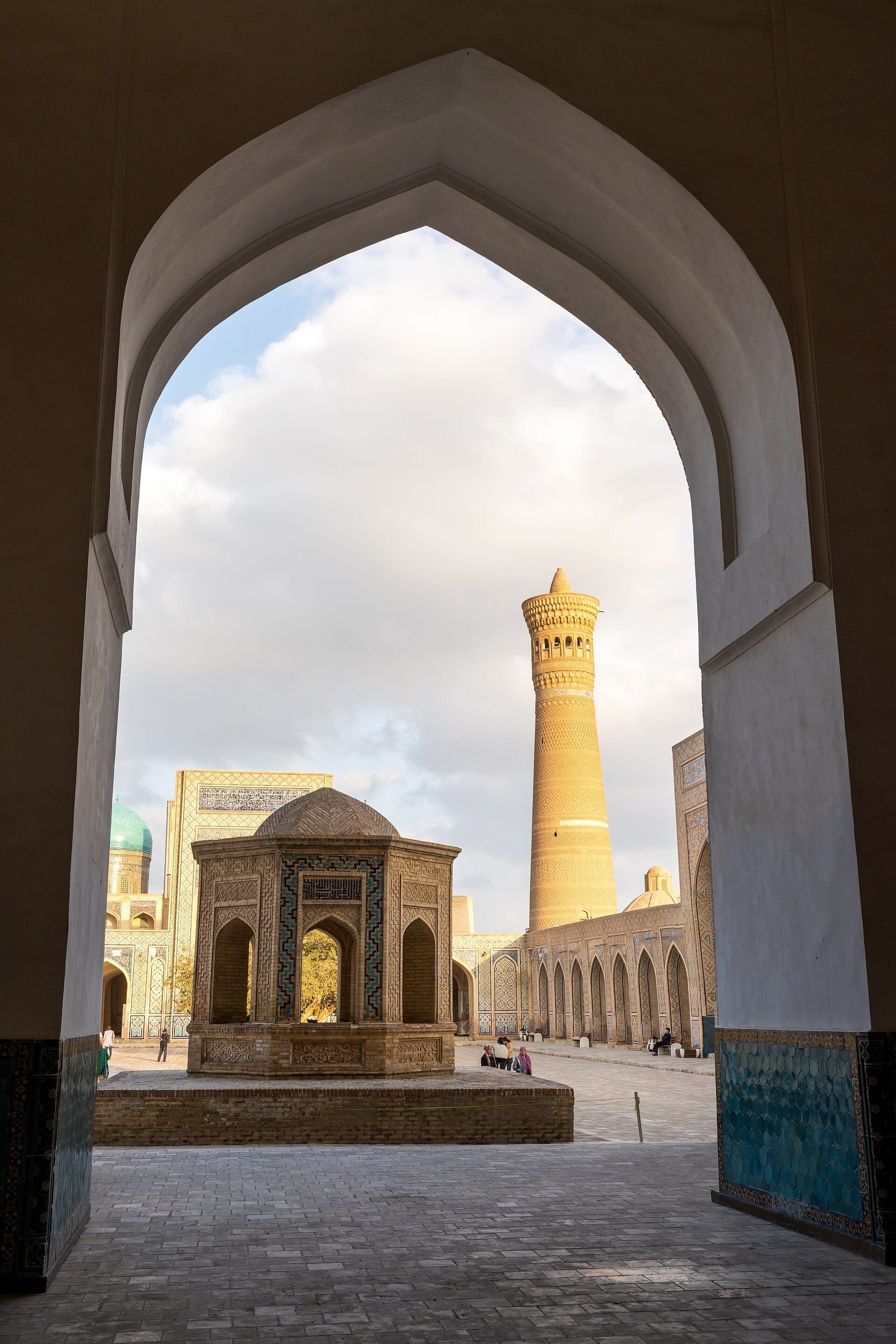
More than two thousand years old and best understood on foot. Trading domes, madrasas and the Kalyan minaret fill a compact old town where everything is close.
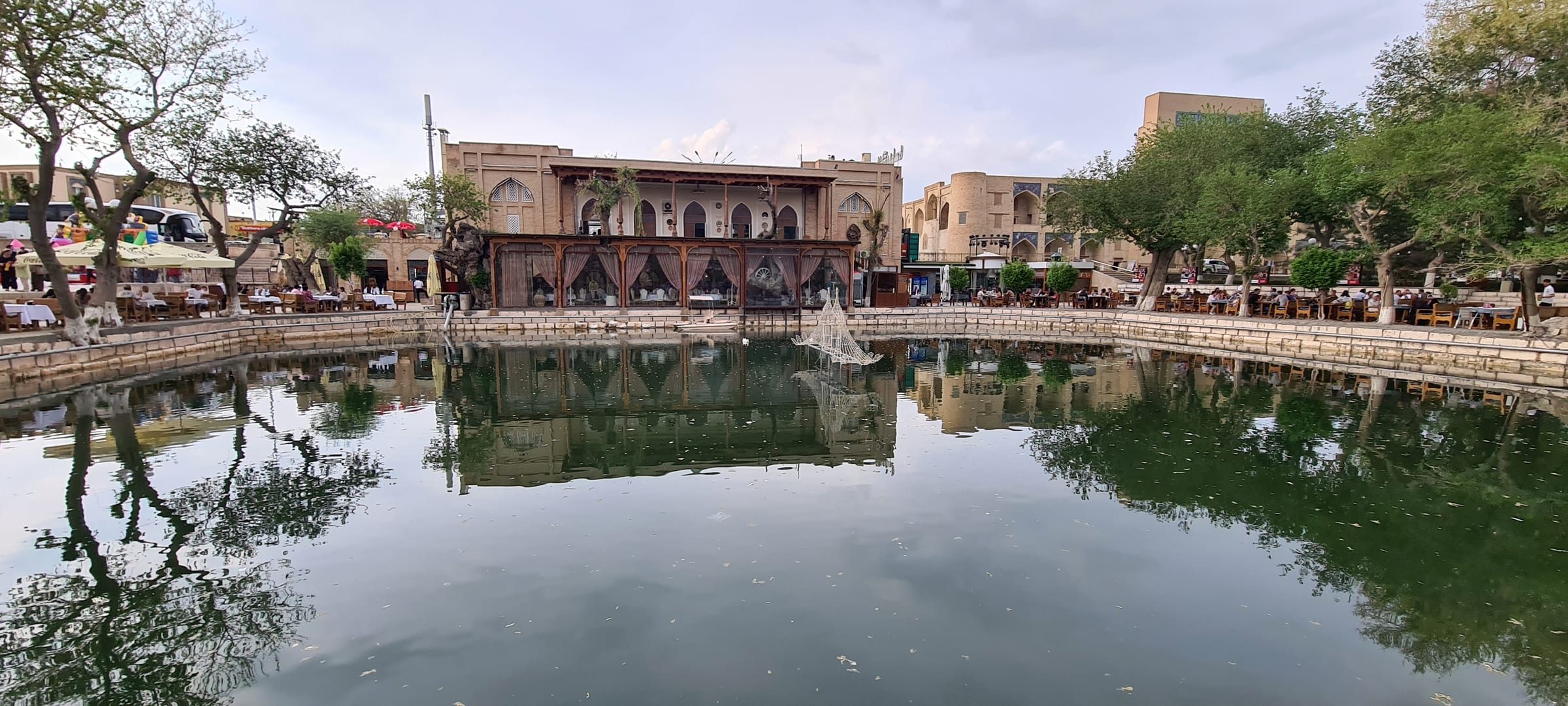
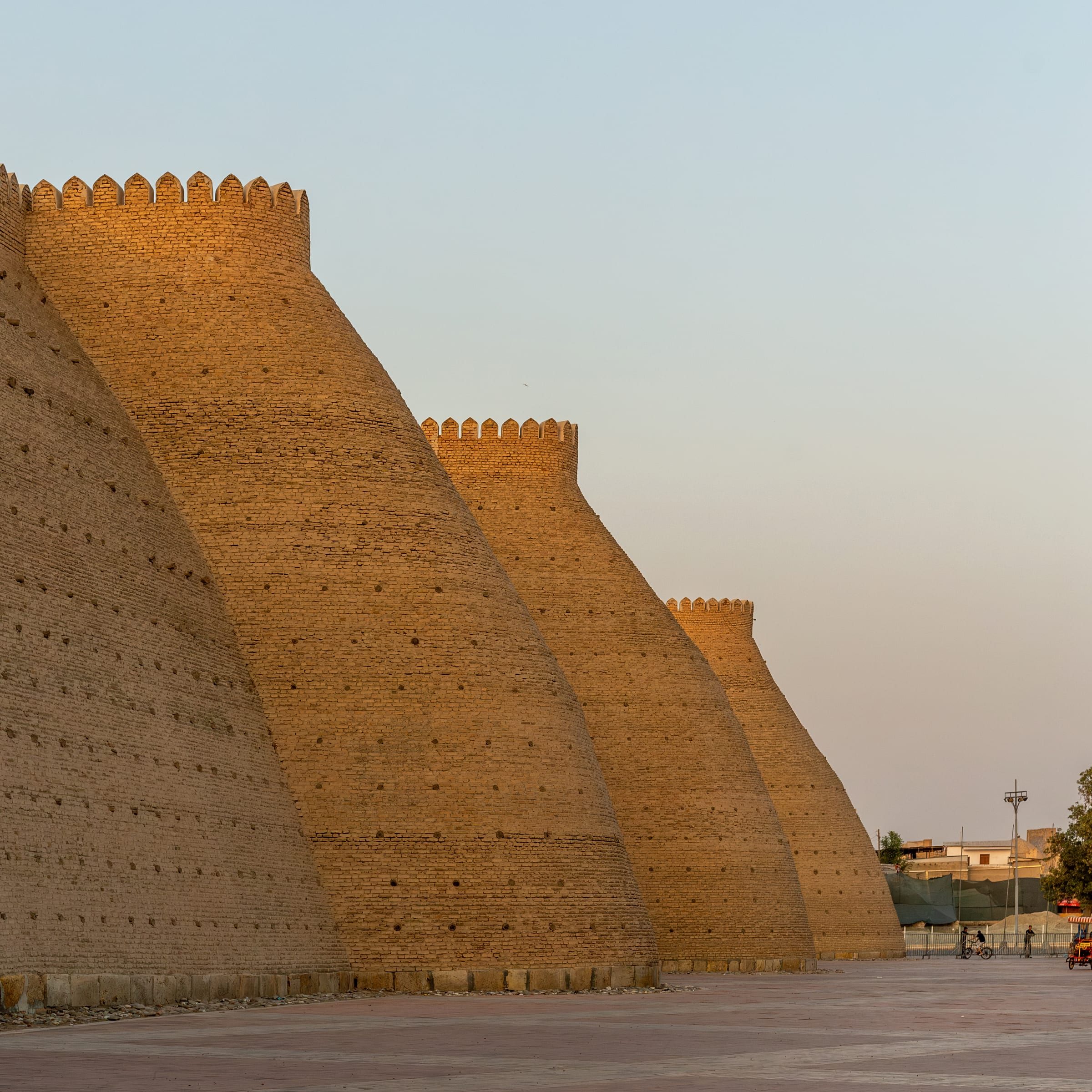
Bukhara has been a city for more than two thousand years, and it is best understood on foot. The old town is compact: from the Ark, the fortress of the emirs, to the pool at Lyabi-Hauz is a walk of a quarter of an hour past madrasas, mosques and the three trading domes built where the streets cross. Nothing here needs a car, and much of what matters can be reached before breakfast.
The Kalyan minaret has stood since the twelfth century, tall enough that Genghis Khan is said to have spared it. At its foot, the Po-i-Kalyan ensemble pairs the Friday mosque with the Mir-i-Arab madrasa, still a working school. Across the old town, the Samanid mausoleum, a cube of patterned brick from the tenth century, is older than almost anything else standing in Central Asia. In the evening, Lyabi-Hauz fills with families under the old mulberry trees.
Bukhara is also the city where craft is most visible: gold embroidery, miniature painting, knives, carpets and the suzani of the surrounding villages, sold under the trading domes and made in the workshops behind them. We arrange visits to the workshops that do not look for visitors, and a dinner in an old courtyard house rather than a restaurant. Two nights is the minimum; the city gives most to those who stay a third and leave one evening without a plan.
The way here and on
From Tashkent
- Tashkent to Bukhara
- Afrosiyob high-speed train, through service, about 4 hours.
Onward
- Bukhara to Khiva
- Private car with driver, across the Kyzylkum, 6 to 8 hours of driving.
- Bukhara to Aydarkul
- Private car with driver, about 4 hours 30 minutes.
- Bukhara to Samarkand
- Afrosiyob high-speed train, about 1 hour 45 minutes.
Travel times are typical, not a timetable, and your designer confirms each one.
When to go
| Month | Typical high / low | Conditions |
|---|---|---|
| JanuarySunrise and sunset: 08:02–17:42 | 5° / −4° | Cold |
| FebruarySunrise and sunset: 07:35–18:18 | 8° / −2° | Cold |
| MarchSunrise and sunset: 06:54–18:49 | 15° / 3° | Unsettled |
| AprilSunrise and sunset: 06:05–19:20 | 23° / 9° | Best |
| MaySunrise and sunset: 05:28–19:50 | 30° / 14° | Best |
| JuneSunrise and sunset: 05:14–20:12 | 35° / 19° | Hot |
| JulySunrise and sunset: 05:27–20:10 | 38° / 21° | Hot |
| AugustSunrise and sunset: 05:54–19:39 | 36° / 18° | Hot |
| SeptemberSunrise and sunset: 06:23–18:52 | 30° / 13° | Best |
| OctoberSunrise and sunset: 06:52–18:04 | 22° / 7° | Best |
| NovemberSunrise and sunset: 07:27–17:27 | 14° / 2° | Cold |
| DecemberSunrise and sunset: 07:56–17:18 | 7° / −2° | Cold |
Typical conditions by month. Long-run averages, not a forecast — real days land either side. Sunrise and sunset on the 15th of each month, in Uzbekistan time.
Journeys that go there
From the journal
Begin your journey
Tell us when you would like to travel and what you would like to see. One designer will reply within one working day.