Silk Road architecture
The great cities of the Silk Road taken as an architecture-led journey: the Registan, Shah-i-Zinda, Po-i-Kalyan and Itchan Kala, seen at the hours when the tiles hold the light, with a private guide who reads the buildings.
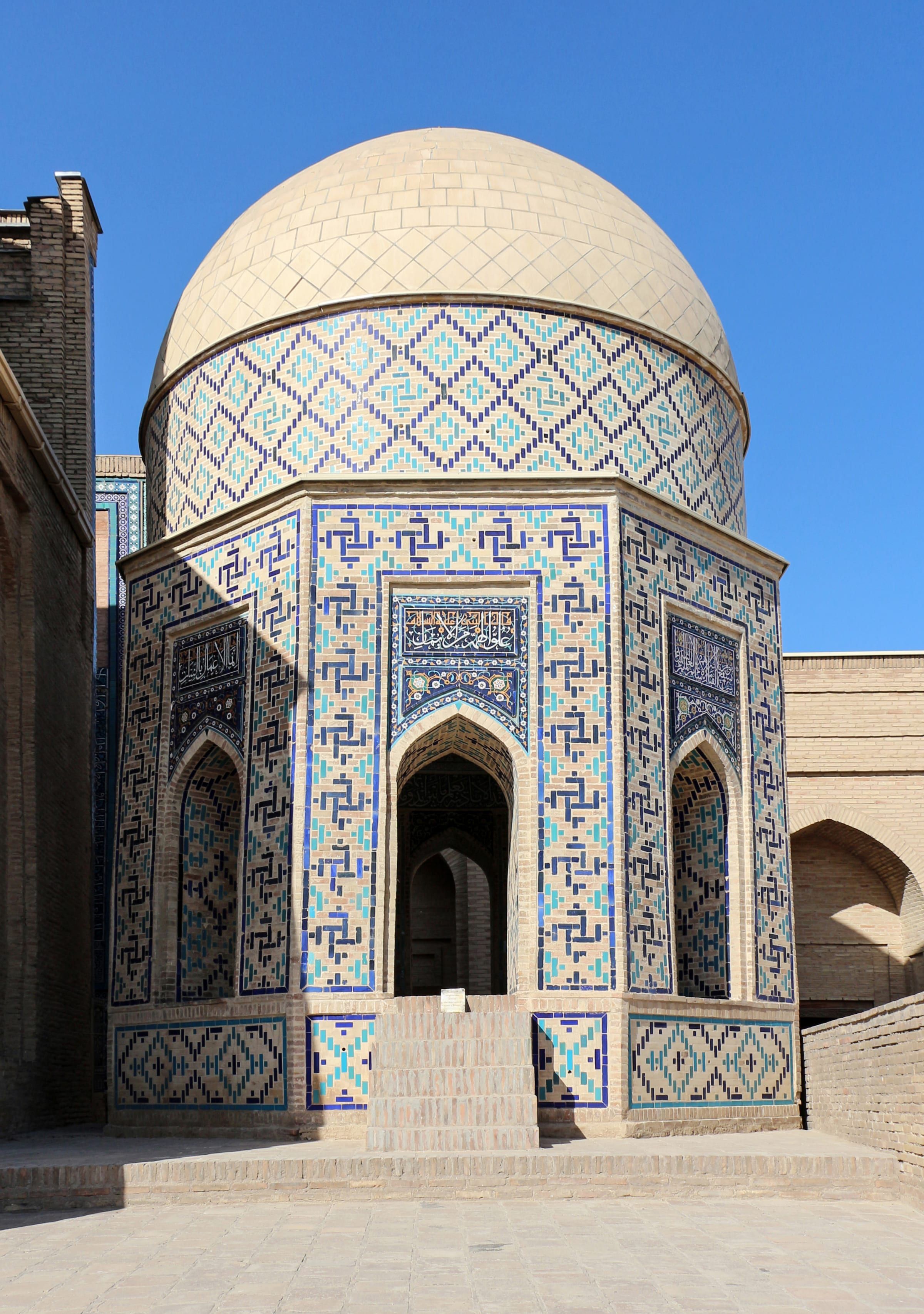
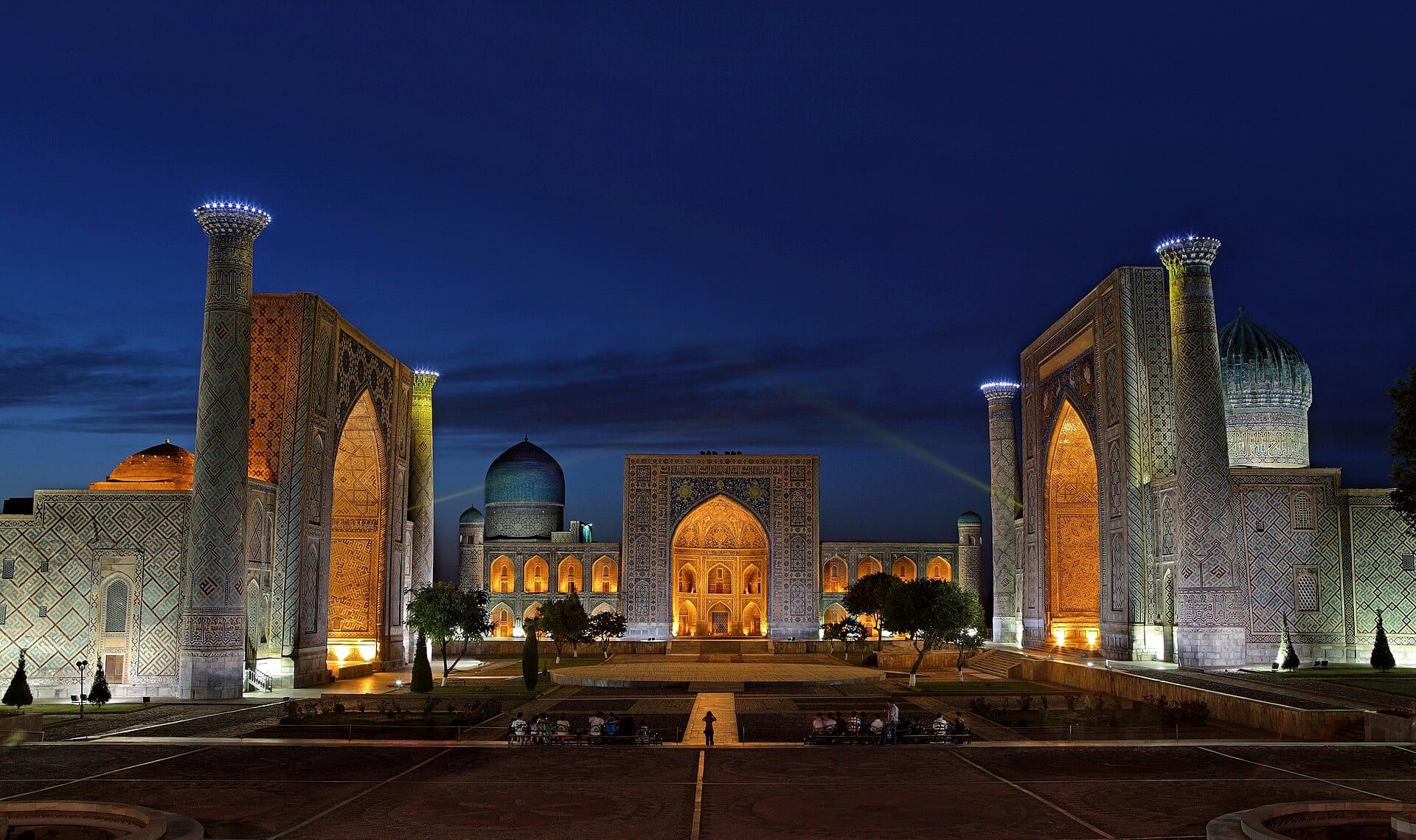
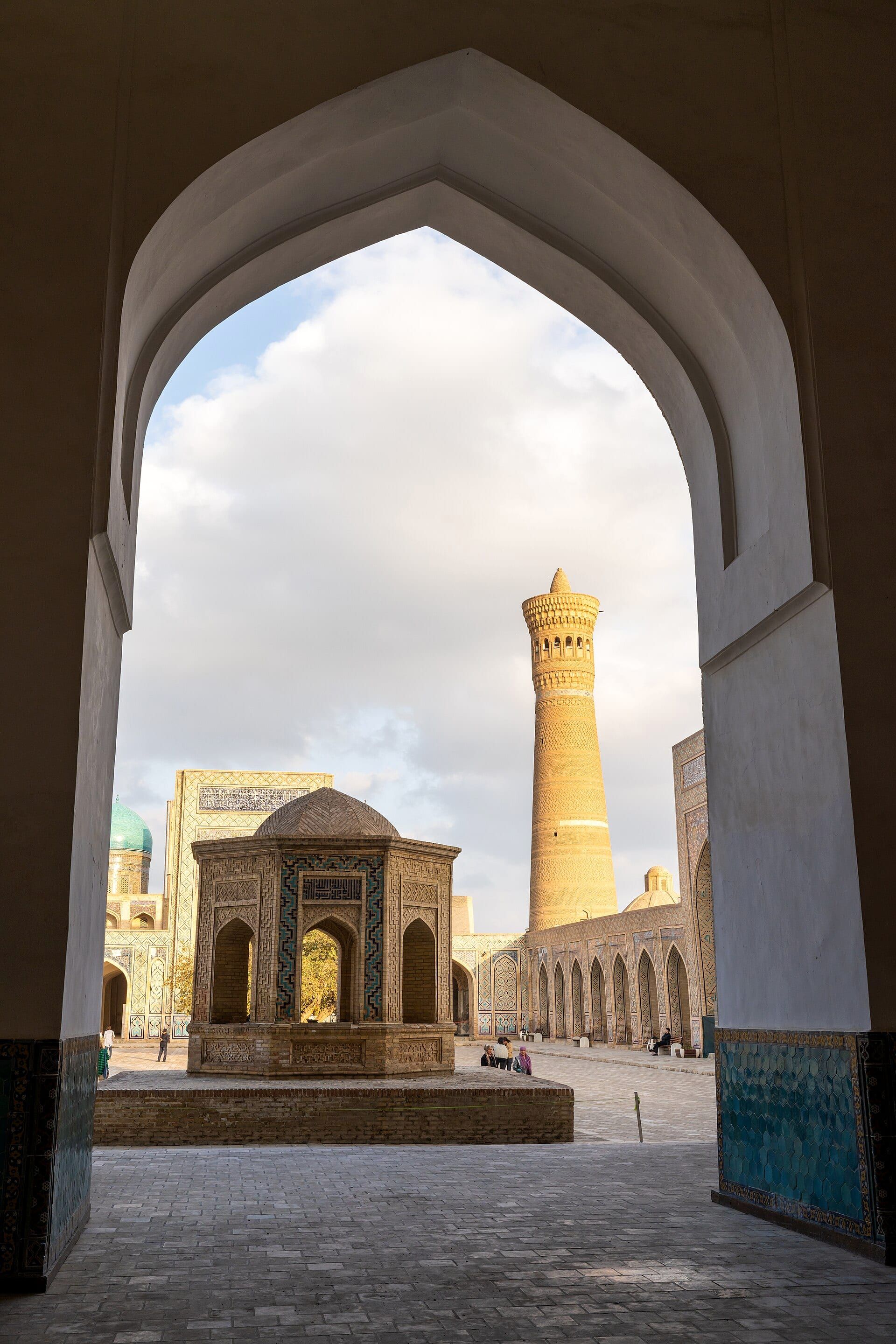
The monuments of Samarkand, Bukhara and Khiva were built over five centuries by rulers who wanted to be remembered, and they are still the reason most people come. The Registan in Samarkand is three madrasas facing one another across a square, raised between the fifteenth and seventeenth centuries. Shah-i-Zinda is a street of mausoleums on the slope of Afrosiab, each façade a different exercise in glazed tile. In Bukhara, the Kalyan minaret has stood since the twelfth century, and the mosque and madrasa at its foot make one of the calmest ensembles in Central Asia. In Khiva, Itchan Kala is a whole walled town of mud brick and turquoise, small enough to walk across before breakfast.
We plan the days around the light. The Registan is best at dawn, when the square is empty and the tiles hold the first colour, and again after dusk, when the lamps come on. Shah-i-Zinda wants the low sun of late afternoon on its façades. In Khiva, the walls turn from grey to gold in the last hour before sunset, and the rooftops are the place to be. Between these hours there is time for the quieter buildings: the Samanid mausoleum in Bukhara, a tenth-century cube of patterned brick; the Ulugh Beg observatory above Samarkand; the Tash-Hauli palace in Khiva, with its carved wooden columns.
What makes the difference is the guide. Ours are people who read buildings rather than recite them: who can show you where a Timurid tile-cutter’s work gives way to a later restoration, how a Koranic inscription is worked into the brick bands of a minaret, and why the muqarnas over a portal catch the light as they do. They know which madrasa courtyards are open before the crowds arrive and which corners hold the best surviving work. The pace is yours. Two buildings looked at properly are worth ten passed through.
More journeys
Silk Road Classic
The four great cities in one week: Tashkent, Khiva, Bukhara and Samarkand, with a day across the desert and high-speed trains between them.
The Grand Journey across Uzbekistan
The whole country in eleven days: all four Silk Road cities, a night in a yurt beside Lake Aydarkul and a day in Shakhrisabz, the town where Timur was born.
Samarkand and Bukhara Express
Four days for the two most celebrated cities of the Silk Road, Samarkand and Bukhara, with the high-speed train between them and time to look rather than hurry.
Begin your journey
Tell us when you would like to travel and what you would like to see. One designer will reply within one working day.