Plov: how it is cooked, and where to eat it
Plov is the national dish, cooked in a kazan in the morning and eaten by noon. How it is made, how Tashkent, Samarkand, Bukhara and the Fergana Valley differ, and where and when to eat it.
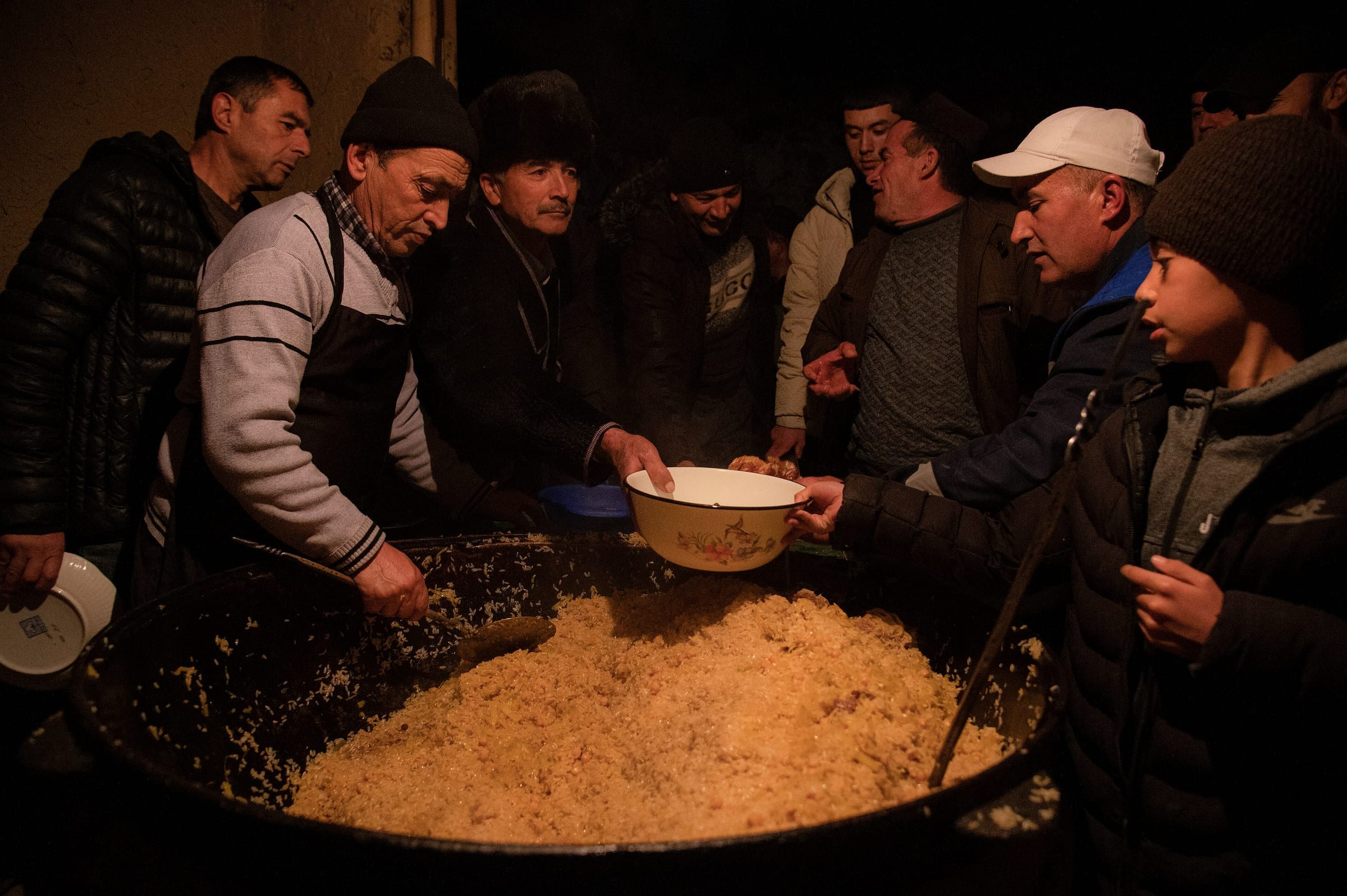
Uzbekistan has one dish above all others, and it is not in dispute. Plov is rice, lamb, carrot and onion cooked together in a round iron pot, and it is eaten at the kitchen table on a Thursday and from a single cauldron at a wedding for several hundred. Every city claims the best version, and every city makes it differently.
How a kazan of plov is made
The pot comes first. A kazan is a heavy round-bottomed cauldron of cast iron, set over a wood fire or a gas ring, and the heat it holds is half of the recipe. Into it go oil, then onion, then the meat, usually lamb, then carrot cut into matchsticks. This base is the zirvak, and it is fried and then simmered until the oil has taken the colour of the carrot. In Tashkent the carrot is often the yellow kind.
The rice is laid on top and is not stirred in. Water is poured over it until it stands a finger above the grain. The fire stays high until the water has gone. Then the lid goes on and the heat is turned down so the rice can steam. Cumin goes in with the zirvak. Depending on the cook, so do chickpeas, raisins and a whole head of garlic, skin and all, which softens in the rice and is handed to the guest of honour. When it is ready the cook turns the rice through the zirvak and heaps it onto one large dish, the meat cut up and laid on top, and the dish goes to the middle of the table. It is eaten from the shared plate, with a spoon or, in the old way, with the right hand.
How the cities differ
Tashkent’s plov is the one most visitors meet first, and the grandest. The wedding version is finished with quail eggs and slices of kazy, the sausage made of horse meat, laid over the rice. Samarkand’s is cooked in the same layers but is never mixed through before it is served: the rice stays pale, the carrot is lifted out and set on top, and the meat beside it, so that each part of the dish keeps its own colour. In Tashkent and the Fergana Valley the cook turns the rice through the zirvak first, and the whole dish comes out the colour of the oil. People from the two cities argue about this, and have for a long time.
Bukhara’s osh-i sofi is gentler and lighter in the oil, and the rice is cooked separately before it is brought together with the rest, which gives it a softness the other cities do not aim for. In the Fergana Valley the difference is in the grain. Devzira is a local rice with a reddish-brown bran, grown in the valley, and it turns the whole dish a shade darker and gives it a firmer bite.
When it is eaten
Plov is cooked in the morning. In the plov centres and the chaikhanas the kazan goes on the fire early, and by the time the lunchtime trade arrives the rice has steamed and settled. Not long after noon the kazan is empty and the fire is let down. It is a lunch dish, heavy with oil and meat, and the rule here is that plov belongs to the middle of the day. It is eaten in the evening too, at home on a Thursday or at an evening wedding, but the plov centres and the chaikhanas cook it for lunch, and by dinner most of them have none left.
The exception is the morning plov before a wedding, which begins before the sun is up. It is for men, it is formal and quick, and it is over before the working day starts. Thursday has long been the day of the week for plov at home, when the family gathers and a pot is made for more people than will sit down. On a Thursday the smell of frying onion in a residential street towards the end of the afternoon is the sign that a pot is on.
Where to eat it
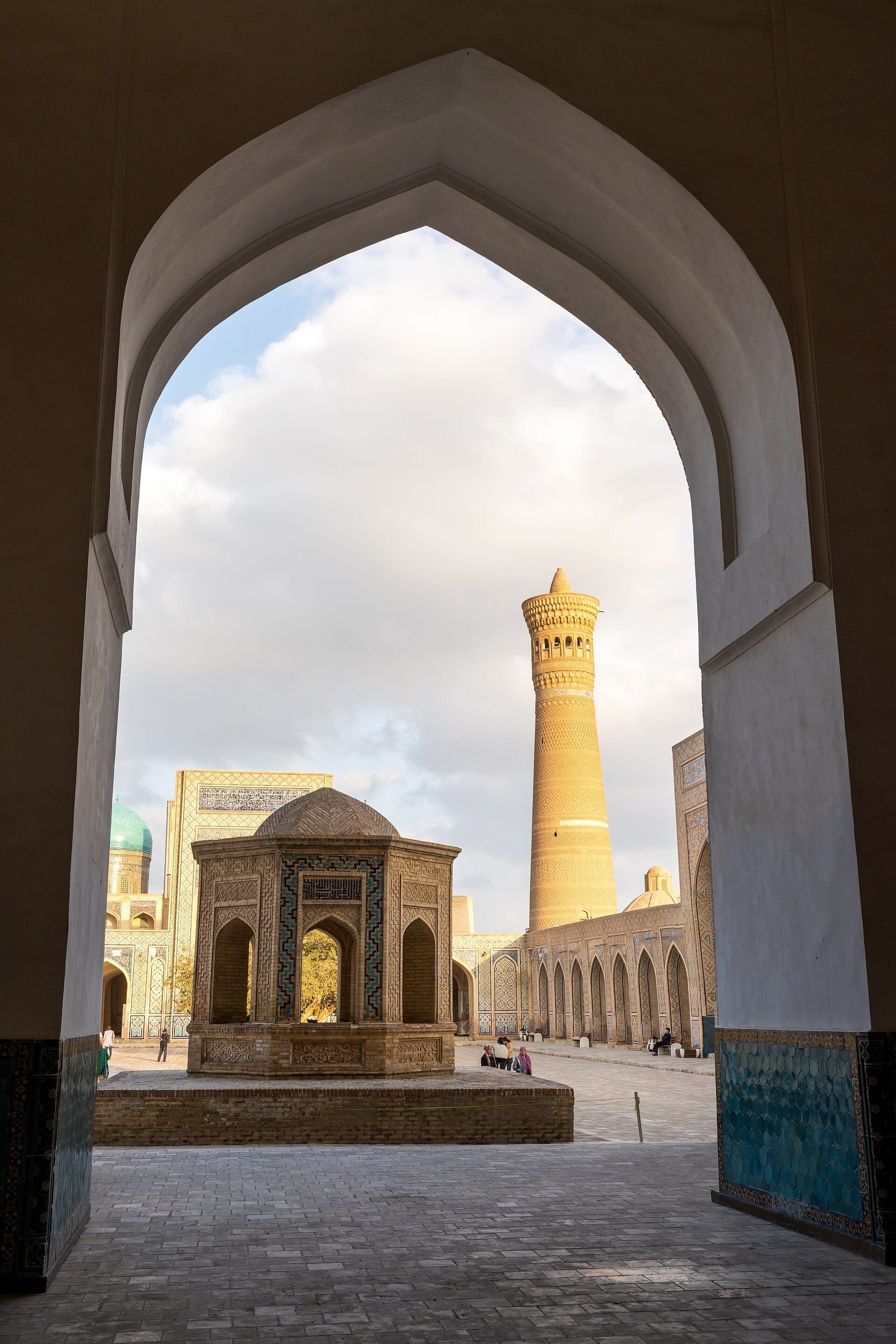
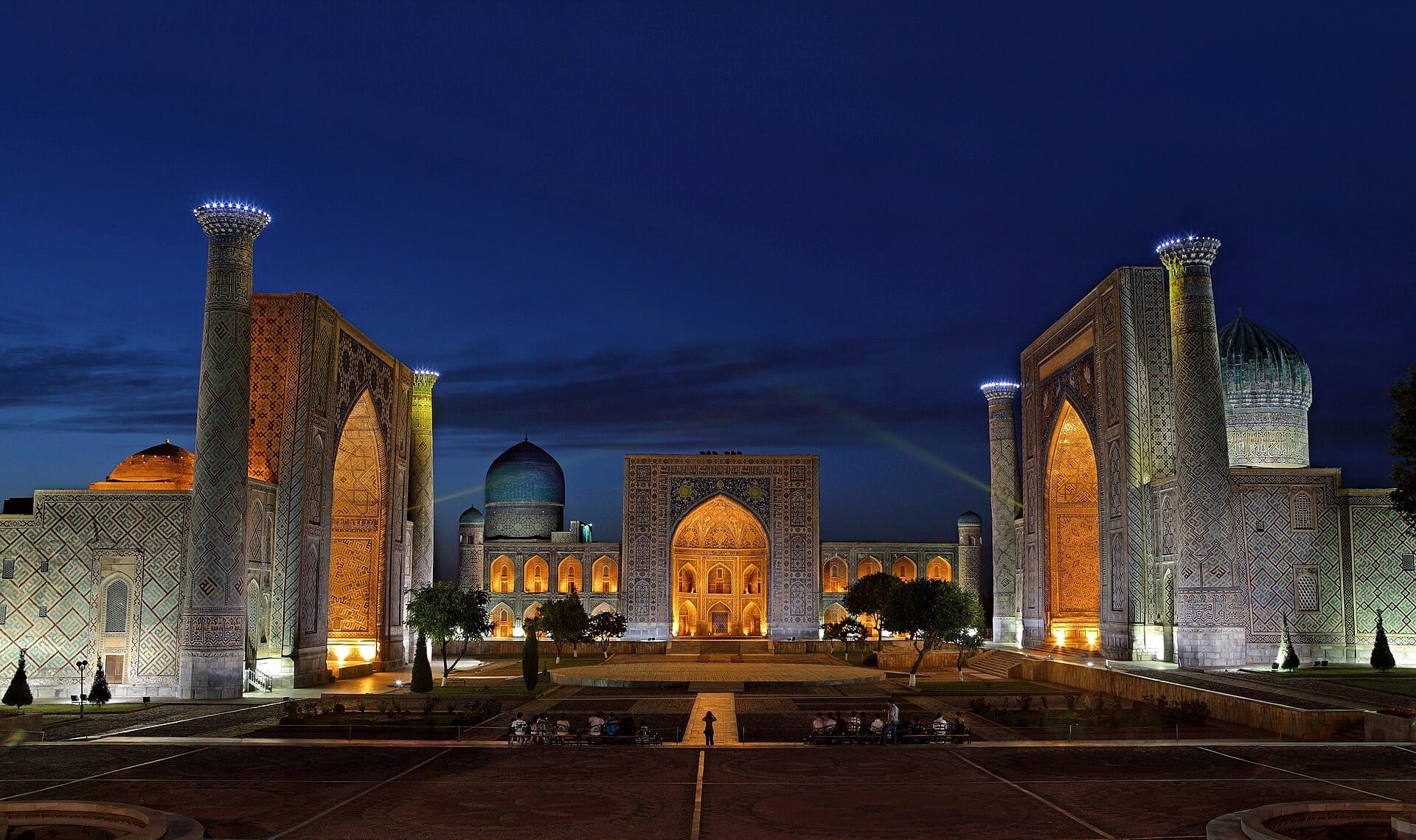
In Tashkent the place to begin is the plov centre near the television tower. Its kazans are built for a crowd of hundreds, the hall is noisy and fast, and the serving goes on until the rice is gone. In Samarkand a chaikhana, a tea house with low platforms to sit on, serves the layered version at midday with the bread of the city beside it. In Bukhara the best plov is eaten in a courtyard house. The family makes it for whoever is at the table that day, the cloth is laid in the shade of the courtyard, and the cook comes out to see that you have had enough.
Best of all is plov at a wedding. Uzbek weddings are large, and the morning plov is open to more people than the family knows, so a visitor who has made a friend in the city is sometimes invited, and the invitation is meant. The morning plov seats only men; a woman travelling with you is more likely to be asked to the wedding feast itself, in the evening, where everyone sits. If it happens to you, go. Eat what you are given, and leave when the people around you leave.
At the table
Plov is eaten with green tea, which cuts the oil, and with a salad of tomato and onion, sliced thin and dressed with little more than salt. A round of non bread is torn and passed, and the pieces are never set face down. There is no soup before it. Plov is the meal, not a course in one.
Your travel designer knows on which mornings a kazan is lit in each city, which chaikhana in Samarkand still lays the rice properly, and which houses in Bukhara seat guests at lunch. Tell your designer what you eat and what you avoid, and whether you would rather watch a kazan being made or stand at it with the ladle, and the meals will be fitted to the days.