A night in a yurt: what to expect
A desert camp near Aydarkul is a ring of felt yurts, plain and warm, a short walk from the lake. What the evening holds, how cold the night gets and what to bring.
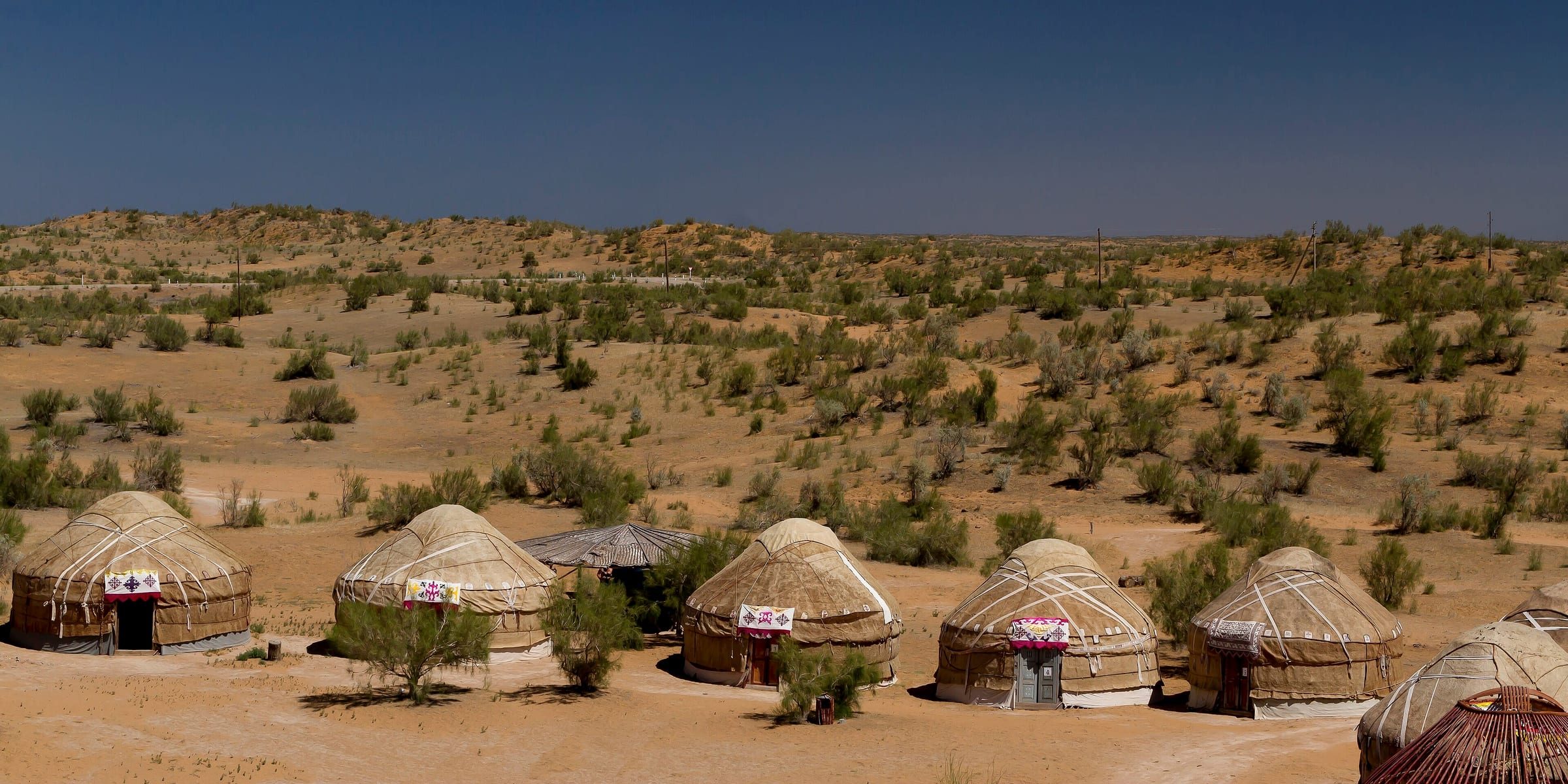
Most journeys between Samarkand and Bukhara take the train. Some turn north into the Kyzylkum instead and spend a night in a felt yurt near Lake Aydarkul. It is the plainest night of a journey across Uzbekistan, and often the one travellers talk about afterwards.
What a camp is
The yurts stand in a ring on the sand, the lake a short walk off. Inside, the floor is carpeted and the beds are low, with thick quilts folded on them. A yurt sleeps four to six. Families and couples are given one to themselves, and larger parties are spread across several. There is a lamp, a low table, a stove for the cold nights and little else.
Washrooms are shared and stand in a block at the edge of the ring. The better camps have hot water; the plainer ones do not. At most camps electricity comes from a generator and runs for a few hours after dark, long enough to charge a telephone and light the yurts until bedtime. There is no wifi worth having, and the mobile signal comes and goes.
The evening
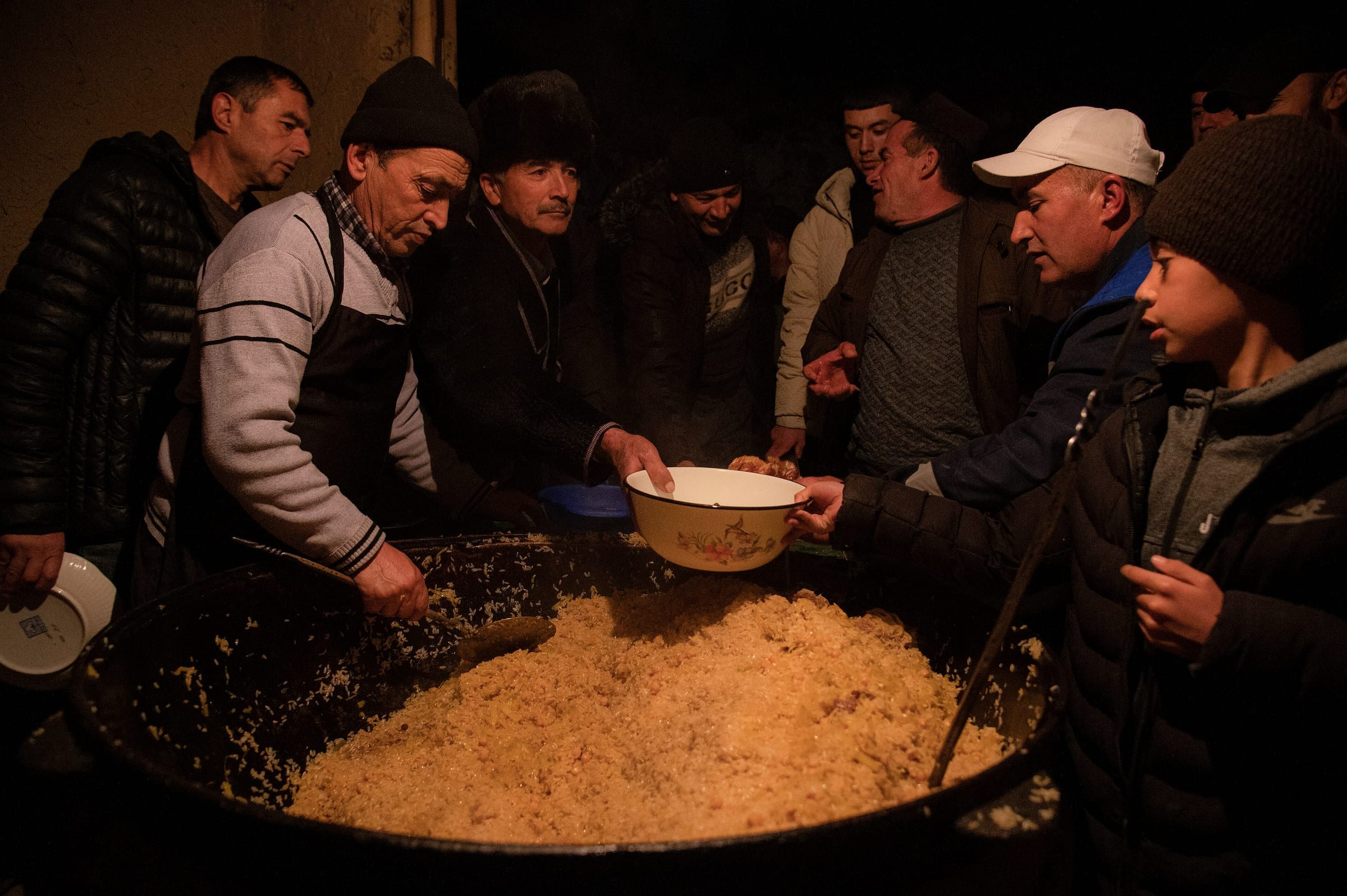
You arrive in the late afternoon, usually from Nurata. The last hour of light belongs to the camels. They are two-humped and slow, and they carry you out into the saxaul scrub while the light goes long and the sand turns the red that gives the Kyzylkum its name. Back at the camp the fire is lit and dinner is cooked over it: soup, bread, a dish of meat and vegetables, tea and whatever fruit the season has.
Many of the camps are run by Kazakh families from the villages nearby, and the food and the songs are theirs rather than something put on for visitors. In some camps a singer arrives after dinner with a dombra, the two-stringed lute of the steppe. When the fire burns down the sky takes over. Nothing lights the sky for a long way, and on a clear night the stars reach down to the sand on every side. People stay out longer than they meant to.
The night and the morning
The heat goes with the sun. In July the night is warm and the quilt may stay folded. In April and October the temperature can fall near freezing before dawn. The quilts are thick and there are spare ones; ask for a second before you turn in. Sleep comes easily once the generator stops. The only sound is the wind against the felt.
The walk to the washroom is across open sand with no lights, so a torch matters. Dawn comes early and is the best hour of the stay. At the camps nearest the shore the lake is a short walk, reeds along it and the birds already up, and the light comes up across the water before it reaches the camp. Breakfast is bread, eggs, jam and tea by the fire, and by mid-morning you are back in the car for Bukhara or Samarkand.
What to bring
A warm layer is the first thing: a fleece or a wool jumper, and in spring and autumn a hat for the night as well. A scarf is useful against the dust and the wind on the camel. Bring a small torch for the walk to the washroom, and shoes you can walk in sand with. Keep a bottle of water in the yurt, because the kitchen closes with the generator. A little cash covers the small things a family may offer. Nothing formal is needed; nobody dresses for dinner in the Kyzylkum.
When the camps run
Most camps run from about April to October and pause for the winter, when the desert nights fall well below freezing. May and September are the easiest months. June, July and August are hot, and the camel and the walk to the lake are kept for the edges of the day. The camps differ, and some are better kept than others; your travel designer knows which, and we say plainly which ones we use and why.
How it fits a journey
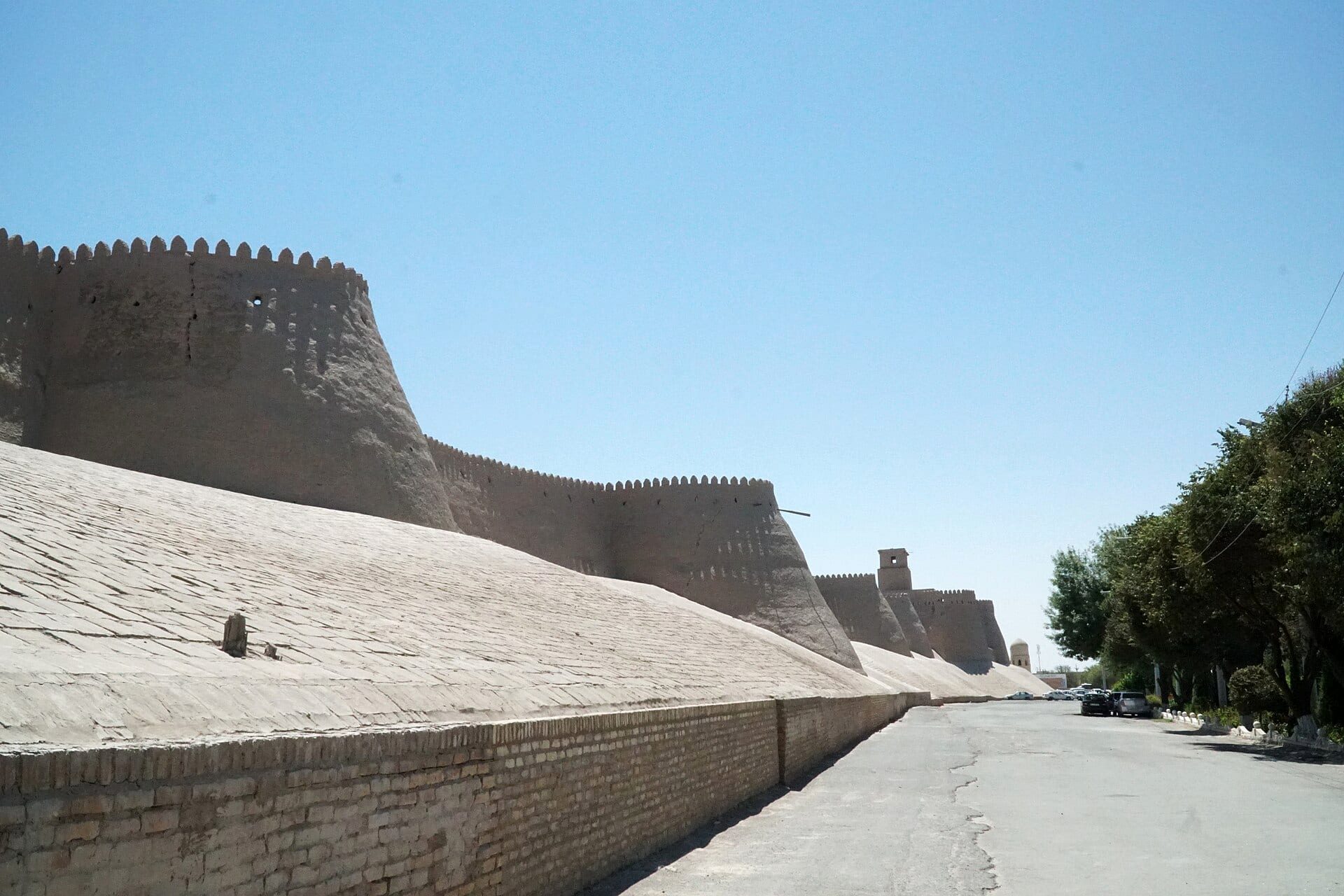
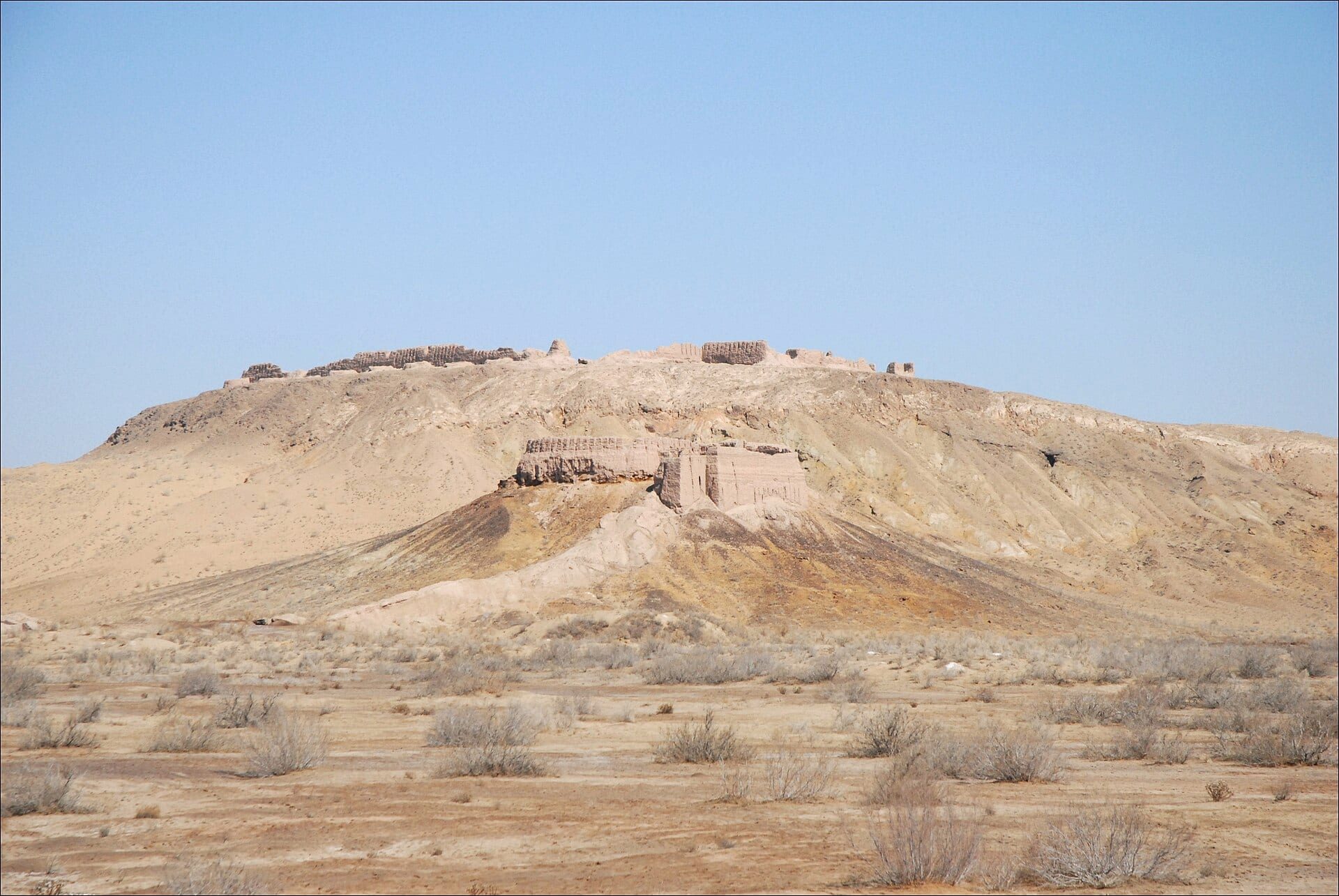
The usual place for the night is between Samarkand and Bukhara. Samarkand to Nurata is about two hours and three-quarters by road, Nurata to the camp about an hour, and the camp to Bukhara about four and a half hours the next morning. On the two-day Nurata Yurt Escape it is the whole journey; on The Grand Journey across Uzbekistan and Uzbekistan in Depth it is the night between Bukhara and Samarkand, the other way round, with Bukhara to Nurata about three and a half hours. On the Khorezm and the Aral Sea journey there is a second camp of the same kind in Karakalpakstan, below the fortress of Ayaz-Kala, with the walls on the hill above the fire.
Your travel designer chooses the camp for your dates and fits the drive and the camel around the last of the light. We will tell you honestly how cold the night is likely to be. Tell us when you are coming, and we will tell you what to pack.