The bazaar calendar: what is in season, month by month
What the stalls hold in each season, from the first greens of Navruz to the pomegranates of November and the dried fruit of winter, and what that means for the table.
The bazaars of Uzbekistan do not keep a fixed stock. What is on the stalls in March is not what is there in July; a visitor who comes twice in a year sees two different markets. The country grows most of its own fruit and vegetables, and the harvest arrives in a strict order. This is that order, month by month, and what it means for the table.
Spring: March to May
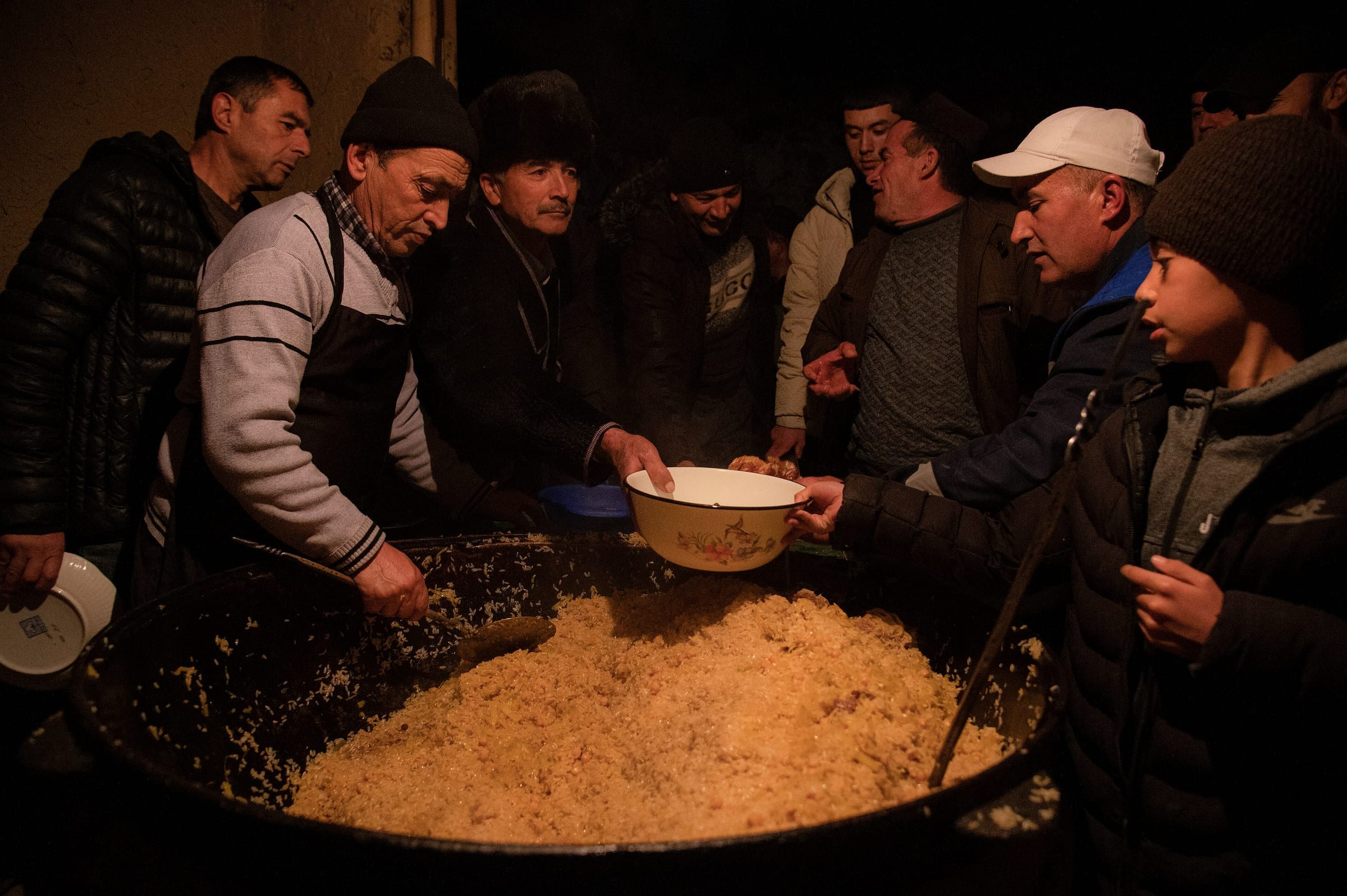
The year begins with green. In March the first herbs come in from the market gardens: coriander, dill and spring onion. With them come the young leaves that go into the samsa stuffed with greens, which bakers sell warm for a few weeks each spring. Radishes follow, small and sharp. On 21 March, Navruz, the holiday of the spring equinox, is kept across the country, and the dish of the day is sumalak, a sweet paste of sprouted wheat stirred in a kazan through the night and shared out in the morning. It is made once a year, and it tastes of the season it opens.
April is blossom rather than fruit. The orchards around Samarkand and across the Fergana Valley flower, and the stalls hold last year’s dried fruit while they wait. May ends the wait. The first strawberries arrive, then the first cherries, and the bazaars take on the colour they keep until November.
Early summer: June
June is the month of stone fruit. Apricots come in from the valley in quantity, and the cherries are at their best. The first peaches appear, still small. Mulberries ripen on the old trees along the streets of Samarkand and Bukhara from late May and fall faster than anyone can pick them; for a few weeks into June the pavements beneath are stained purple. By late June the first early melons appear from the south; the stalls fill with them in July, and the good ones are still to come.
High summer: July and August
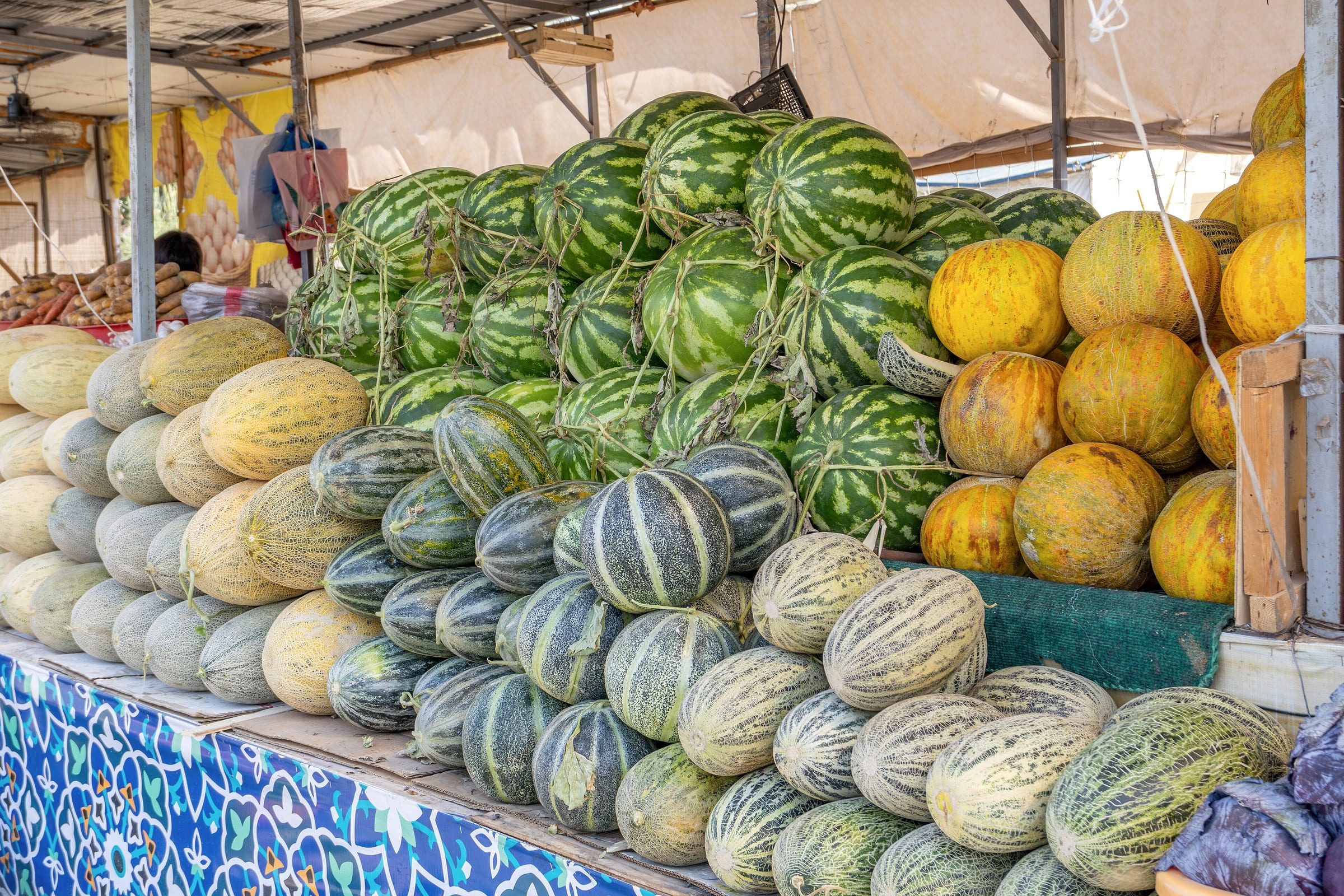
July and August are the melon months. There are dozens of kinds, long and round, netted and smooth, white-fleshed and orange, each with its district and its moment. A stall may hold a single variety stacked higher than the person selling it. Watermelons arrive alongside. From late July there are grapes, then figs, and the peaches and plums are at their fullest. This is the harvest the country waits for.
It is also hot. The bazaars open early, fill before eight and go quiet by the middle of the day, when the stallholders retreat to the shade. The bread is baked from before dawn, and the first batches are out of the tandoor before the sun is well up. A morning at the bazaar in August is a fine thing, and so is the hour after five.
Autumn: September to November
September brings the grapes to their height, and with them the first pomegranates and quinces. In October the pomegranates are at their best, split open on the stalls to show the seeds, and persimmons, apples and walnuts from the valley join them. The last melons are still there, and will be for a while. It is the month the bazaars are fullest, and the one we suggest to anyone who travels to eat.
November is the turn. The persimmons stay, bright on bare branches and on the stalls. The dried fruit comes out in earnest: apricots, raisins, mulberries, the figs of the summer pressed flat. It is set out in long rows, and the winter is eaten from it.
Winter: December to February
The winter bazaar is a different place, and a good one. Most of the fresh fruit is gone; apples, quinces and the last pomegranates keep into the new year, and the rest is what the summer put aside: dried apricots and raisins of several kinds, almonds, walnuts and pistachios, and the winter melons that hang in nets and keep for months. There are pickles and preserves, carrots and onions for plov, and the bread is the same as ever. The halls are cold, and the tea houses beside them are full.
The bread
The bread does not change. Non, the round loaf, is baked in a tandoor, slapped against the hot clay wall and lifted out a few minutes later. Before it goes in it is stamped in the centre with a chekich, a wooden tool set with pins, so that the middle stays flat and crisp while the rim rises. Every town has its own pattern and its own loaf. The bread of Samarkand is the famous one, dense and firm enough to keep for days, and it leaves the city in bags on every train.
What this means for the table
The calendar is not a reason to choose one month over another. It is a reason to know what you will find. A journey in May eats strawberries and the first cherries; the same journey in October eats pomegranates and the last of the melons; in January it eats dried fruit, nuts and soup. Your travel designer fits the markets to the mornings, when they are at their best, and the fruit to the table. Tell us what you like to eat, and the season will do the rest.