Tashkent in a day
Most journeys begin in Tashkent with a day to spare. How to spend it, hour by hour, from the old city at nine to a chaikhana at dusk.
Nearly every journey passes through Tashkent, and nearly every traveller has a day here to fill: the morning after a night flight, or the day before the train west. The city is large, modern and easy to pass through, and many travellers do. It repays a day. Here is one way to spend it, hour by hour, with a private guide and a car with driver.
Nine o’clock: the old city
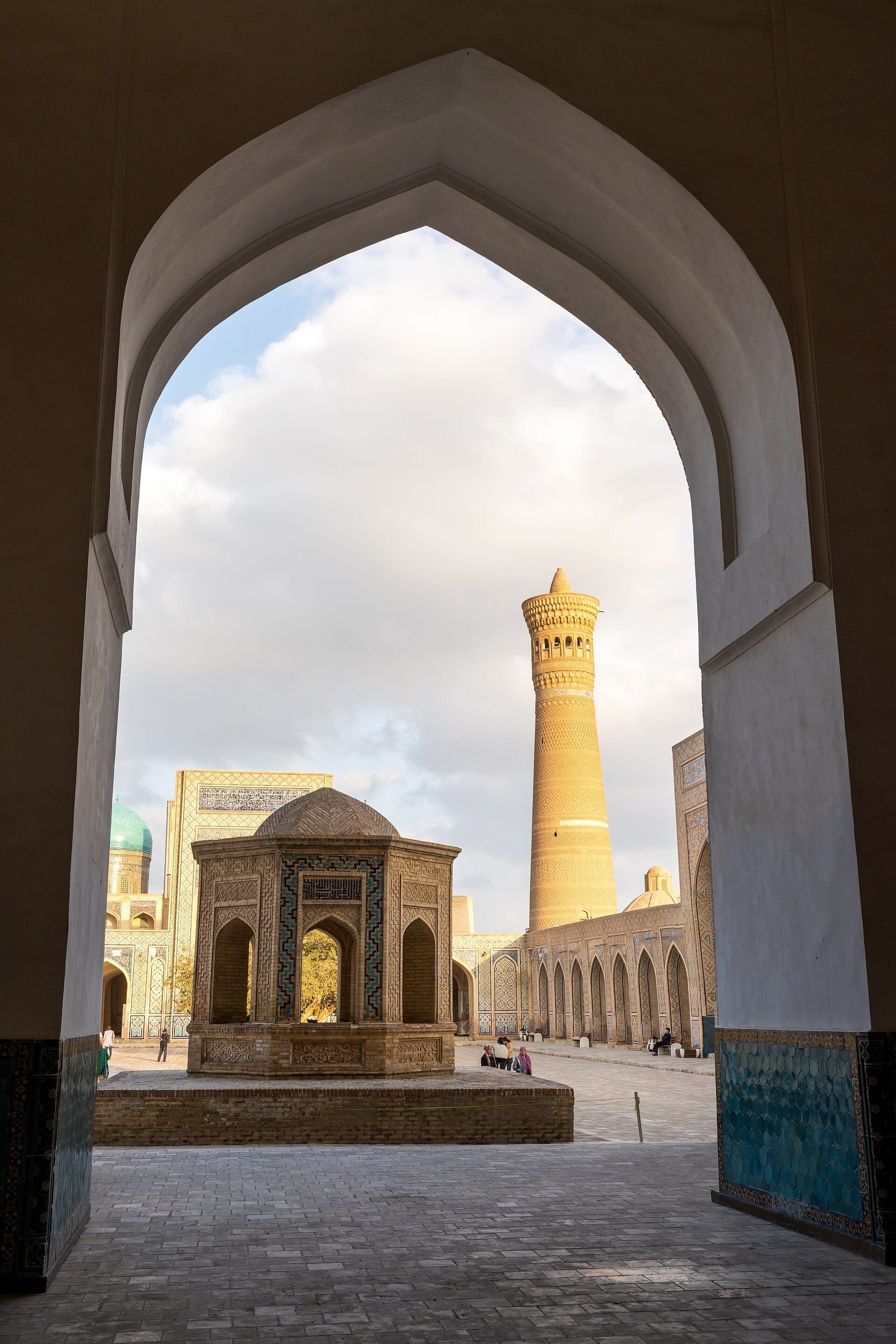
Start in the old city, before the heat and before the coaches. At the Hazrati Imam complex the madrasas and mosques stand around a wide paved square, and the library at one side keeps one of the oldest Qur’ans in the world, written in an early Kufic hand on parchment and said to have belonged to the caliph Uthman. Ten minutes with it is enough. Walk out through the old mahalla beyond the complex: low houses of mud brick, vines trained over the lanes, a bakery with its tandoor already lit.
From there it is a short drive to Chorsu Bazaar. The main hall sits under a great tiled dome, and inside it the trade is arranged in rings: butchers at the centre, pickles and dairy around them, the spice rows on the gallery above with cumin, coriander and dried barberries in open sacks. Bread comes from the tandoors outside, stamped in the middle and still warm. The dried fruit stalls sell apricots, raisins, walnuts and almonds by the kilo, and the sellers expect you to taste first. Beside the bazaar stands the Kukeldash madrasa, sixteenth century and plain brick; its courtyard is a good place to sit after the noise.
Midday: plov
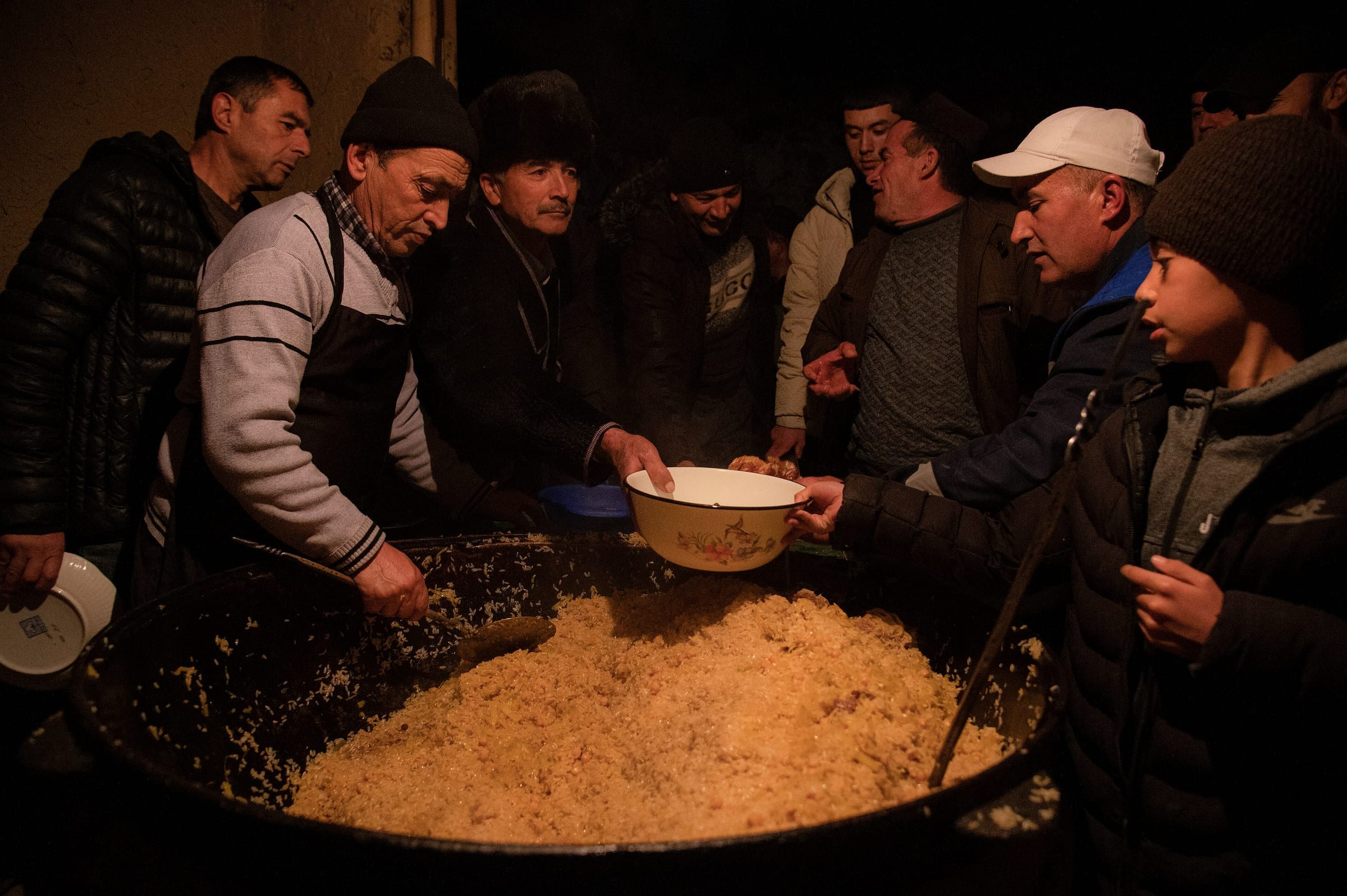
The city eats its plov at midday. It has been cooking since early morning, and once the lunch trade has passed the kazans are empty. The plov centre near the television tower cooks it in kazans wide enough to feed several hundred people at a sitting, and the queue, the steam and the long shared tables are part of the meal. A quieter alternative is a chaikhana, where the plov comes to a low table with a salad of tomatoes and onions, a pot of green tea and a round of bread. Either way the dish is the same: rice, lamb, yellow carrots, chickpeas, sometimes a quail’s egg.
In summer the city slows after lunch. Through the hottest hours of the afternoon the streets are quiet and anyone sensible is indoors. Follow the local example: a rest at the hotel or tea in a shaded courtyard, and the afternoon begins when the heat eases. In spring and autumn there is no need to wait.
Three o’clock: underground
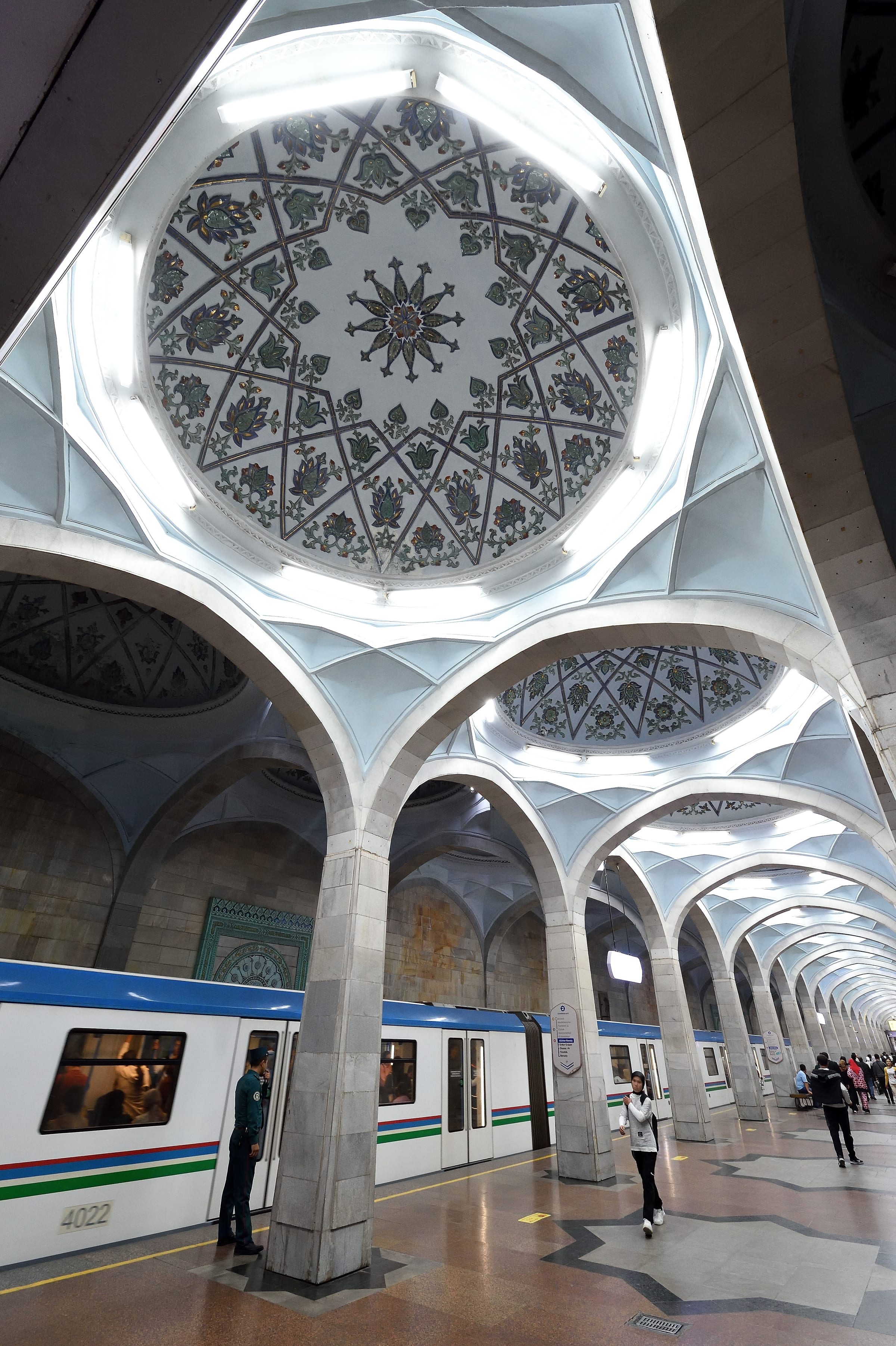
The Tashkent metro opened in 1977, the first in Central Asia, and its stations were built as public rooms rather than platforms: marble floors, ceramic panels, bronze and chandeliers. Photography was forbidden until 2018, and the stations are only now becoming known outside the country. A single ticket takes you between the best of them. Kosmonavtlar is a hall of deep blue, with portraits of the cosmonauts set into the walls in ceramic medallions. Alisher Navoiy is a row of patterned domes on white columns. Your guide knows which others are worth stepping out at.
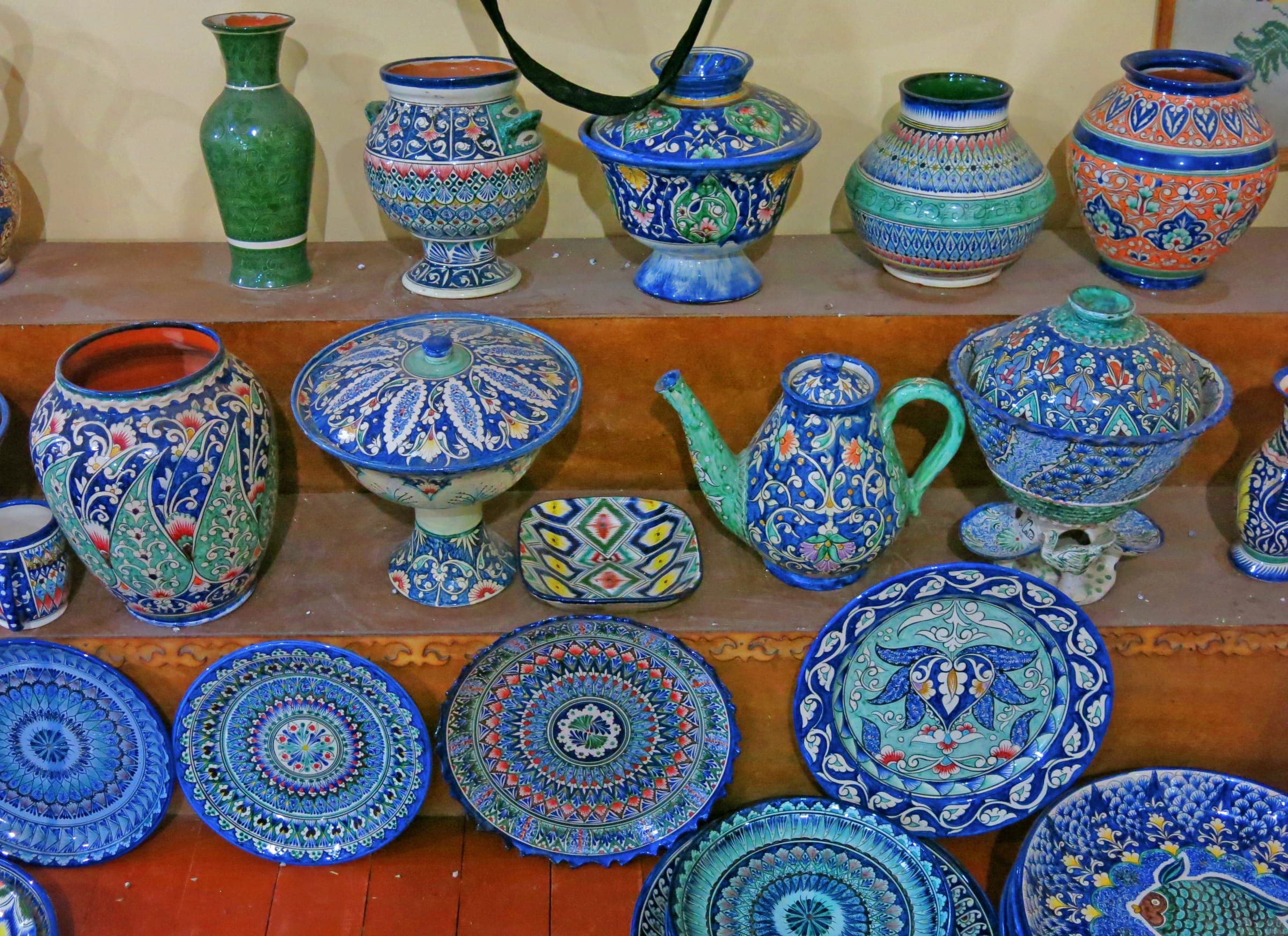
Come up near the centre for the Museum of Applied Arts. It occupies the house of a Russian diplomat who, in the early years of the twentieth century, had the rooms decorated by the city’s master craftsmen in carved plaster, painted ceilings and tile, and the house is the first exhibit. The collection is the second: suzani embroidery, ceramics from Rishtan and Gijduvan, carved wood, jewellery and ikat silk. An hour here teaches you what you will meet in the regions, and how to tell a good suzani from a lesser one.
Six o’clock: the centre
The evening belongs to the centre. Amir Timur square is where the centre gathers in the evening: lawns, fountains, the conqueror on horseback in the middle, and plane trees around its edge. At six it fills with families, students and wedding photographers. A short walk away is the Navoi Theatre, finished in the years after the war, partly by Japanese prisoners of war, whose part in it a plaque on the wall records. Six halls inside were each decorated by craftsmen in the manner of a different region of the country, and from autumn to early summer it stages an opera or a ballet several evenings a week. Tickets are inexpensive by European standards.
Dinner is a chaikhana again, or a courtyard restaurant under vines: kebabs over charcoal, manti, salads and a fresh round of bread. For those who want one more building, the Minor mosque, on the bank of the Anhor canal, is lit at dusk and open to visitors between prayers. Its white marble is nothing like the morning’s brick, and the walk along the water afterwards is a good way to end.
The hinge of a journey
Tashkent is where a journey turns. It is the first night after a long flight, when a day of slow walking and an early dinner is the best cure for the time change. It is the evening before the train to Samarkand, when the bags are packed and there is time for the theatre. It is the last dinner before the flight home, when the suitcase already holds the dried fruit and nuts from a morning at Chorsu. The order is a suggestion and the hours approximate. Your travel designer lives here. Say how many hours you have, and whether they fall before the train or after the flight, and the day will be cut to fit them.