The best time to visit Uzbekistan
Spring and autumn are the easy answer. What each season actually feels like, from the blossom of April to snow on the domes, and how to choose between them.
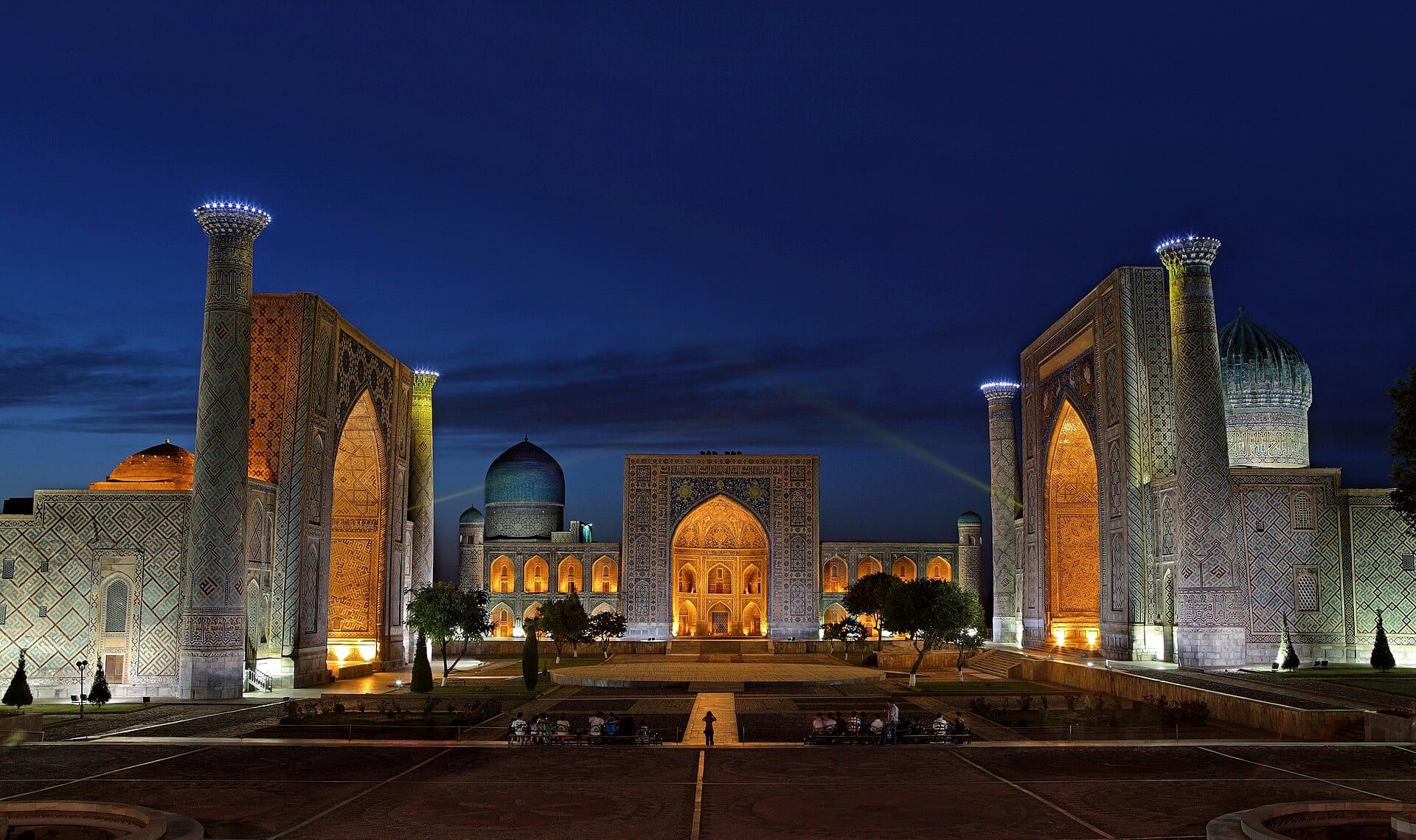
Ask anyone who lives here and you will get the same answer: spring or autumn. It is the right answer, but it is not the whole of it. Uzbekistan is a large country of desert, river valley and mountain, and each season changes it in a different way. The best month depends on what you want the days to feel like, how you take the heat, and how much company you are willing to share the Registan with.
Spring: March to June
Spring is the season most people choose, and it earns its reputation. The days are warm without being heavy. The steppe and the edge of the Kyzylkum turn green for a few short weeks, which surprises anyone who imagined the desert as permanently brown. Around Samarkand and across the Fergana Valley the orchards come into blossom, apricot first, then cherry and apple, and by late May the first fruit is on the bazaar stalls.
The price of all this is that everyone knows. April and May are the fullest months of the year. The better hotels in Samarkand and Bukhara are taken well in advance, seats on the Afrosiyob go early, and the courtyards of the old towns are shared. We suggest settling spring dates as far ahead as you can, ideally the previous autumn, so that the hotels you want are the hotels you get. March is a quieter alternative: cooler, occasionally wet, and with the Navruz holiday at the equinox giving the cities a festive air. June is still pleasant in the mountains and the valley, and already hot in Khiva.
Summer: July and August
Summer is hot and dry. In the lowlands the afternoon temperature often passes 40°C, and in Khorezm and around Bukhara it can stay there for weeks. This is not a reason to rule the season out, but it is a reason to plan it properly. The day is arranged around the heat: an early start, the monuments before ten, a long rest through the middle of the day, and the bazaars and courtyards again after five, when the light softens and the stone gives back its warmth.
There are compensations. The great monuments are quieter than at any other time, and in the first hour of the morning you may have the Shah-i-Zinda to yourself. Hotels have more room and rates are lower. The mountains above Tashkent are cool, and the valleys around Chimgan make a comfortable pause between cities. For travellers who do not mind the heat, or who prefer emptiness to comfort, summer can be the most private of seasons.
Autumn: September to November
Autumn is spring’s rival, and for many of us who live here it is the better of the two. September still carries some of the summer’s heat, but the nights cool quickly, and by October the days are warm and clear, the light long and golden on the tilework. The bazaars are at their fullest: melons, grapes, pomegranates, quinces, the late figs and the first walnuts from the valley. It is the season of the harvest, and a good time to eat.
Autumn, like spring, is popular, and October in particular fills up. Book early. November is quieter and cooler. The trees turn, the crowds go, and the desert nights become cold enough to want the yurt stove lit. It is a fine month for the cities and a marginal one for the desert.
Winter: December to February
Winter is cold, dry and quiet. Tashkent and Samarkand see snow, sometimes a light dusting on the domes that lasts a morning, sometimes more. The old towns are almost empty, hotel rates are at their lowest, and a walk through Itchan Kala in Khiva with your breath showing is a different thing from the same walk in May. Some desert journeys, including most of the yurt camps near Aydarkul, pause for the season, and mountain roads can close for a day after heavy snow. If you like empty streets and do not mind wrapping up, winter has a great deal to give.
How to choose
If you want the classic picture of the country, the blossom and the green desert, choose April or May and book early. If you want warmth, harvest and long light, choose late September or October. If you prefer solitude to comfort, and are willing to travel early and late in the day, summer will reward you with an emptiness few visitors see. If you want the lowest rates and the quietest streets, and can do without the desert, choose winter.
Whatever the season, tell us your dates first. Your travel designer plans the order of the cities, the timing of each day and the pace of the whole journey around the month you are travelling, so that the country you arrive in is the one you hoped for.